

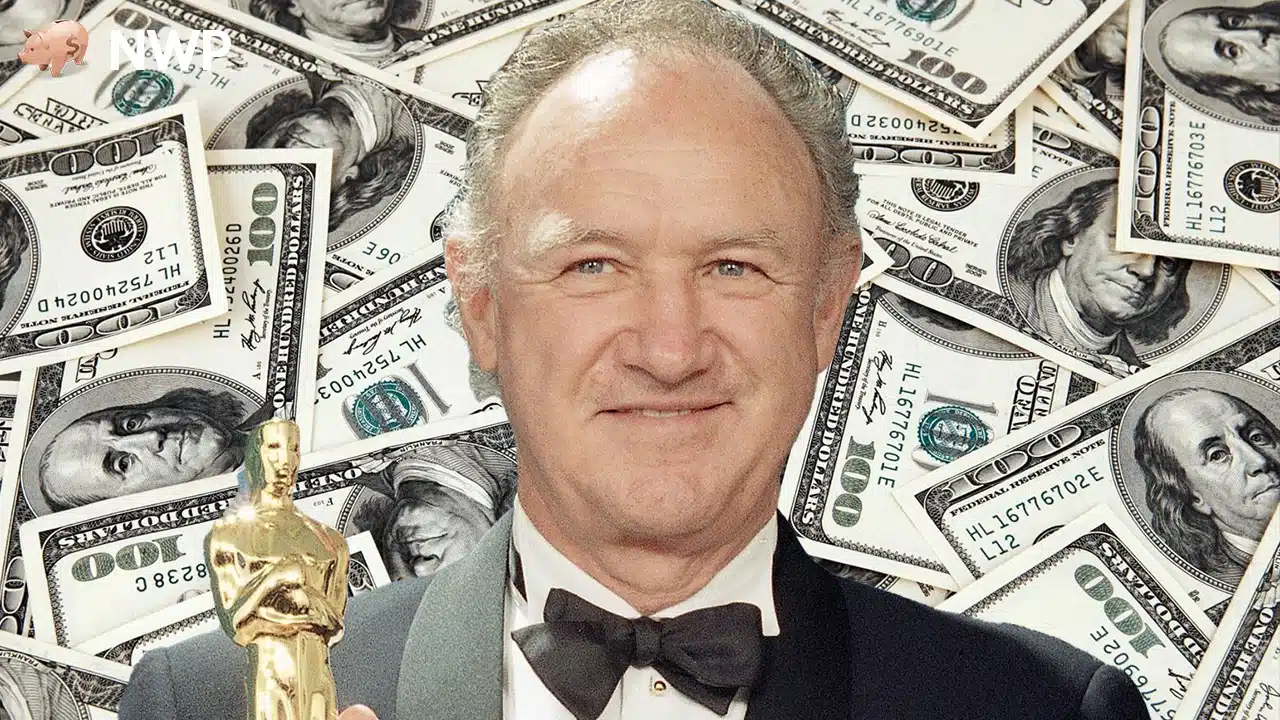
“There was no finer actor than Gene. Intense and instinctive. Never a false note.” — Clint Eastwood, reflecting on his friend’s artistry and their decades‑long bond[source].
“The loss of a great artist … cause for both mourning and celebration.” — Francis Ford Coppola, honoring Hackman’s life and contributions[source].
“Loved you in everything! … You were one of the greats. Rest well, sir.” — Viola Davis, paying tribute to a performer who inspired actors across generations[source].
Gene Hackman’s death on February 26 2025 stunned Hollywood and fans alike. The two‑time Oscar winner was discovered alongside his wife, Betsy Arakawa, and one of their dogs in their Santa Fe home. Early reports were chaotic: carbon‑monoxide poisoning, gas leaks and rumors of foul play bounced around social media and tabloids. Within days, authorities ruled out those scenarios, but the mystery of how a seemingly healthy man in his mid‑90s and his 65‑year‑old spouse had died in their secluded compound lingered.
This article separates fact from rumor and explores the layers of Hackman’s final chapter — his private life, the details of the deaths, the reaction from friends and fans, and the overlooked elements of his legacy. It draws on statements from law enforcement, medical investigators, family members, and the film community, and examines how Hackman’s long retirement and elusive public presence heightened curiosity around his death.
A Storied Life: From Marine to Movie Icon to Novelist
Gene Hackman’s career spanned more than four decades, from his break‑out role in “Bonnie and Clyde” (1967) to later masterpieces like “Unforgiven” and “The Royal Tenenbaums.” He won two Academy Awards — best actor for “The French Connection” in 1972 and best supporting actor for “Unforgiven” in 1993 — and was nominated five times. On screen he often portrayed flawed everymen, detectives, coaches and villains, bringing an intensity that never felt mannered. Reviewers noted how his characters were “real people” rather than movie stars playing themselves.
Born in 1930 in San Bernardino, California, Hackman joined the Marine Corps as a teenager, then studied acting in New York alongside Dustin Hoffman and Robert Duvall. His perseverance paid off in the 1970s, when New Hollywood embraced naturalistic performances. Roles in “The Conversation” and “Hoosiers” cemented his reputation as one of America’s greatest actors.
Retreat from Acting
By the early 2000s, Hackman began stepping away from acting. After “Welcome to Mooseport” (2004), he told Reuters he was effectively retired from acting and was unlikely to return to the screen[source]. He was 74 and had spent nearly 60 years performing. Instead of seeking cameos or awards‑season parts, Hackman poured his energy into writing and art.
Novelist & Storyteller
Hackman’s second career as an author began with “Wake of the Perdido Star” (1999), the first of three historical novels he co‑wrote with marine archaeologist Daniel Lenihan. The pair followed that sea‑adventure with “Justice for None” (2004) and “Escape from Andersonville” (2008)[source]. After retiring, Hackman wrote two solo novels: the western “Payback at Morning Peak” (2011) and the crime thriller “Pursuit” (2013)[source]. In a 2014 interview he described writing as “my way of staying relevant,” noting that it kept his mind active when acting became physically demanding[source]. He said he never saw himself as a great writer but enjoyed the process[source].
Painter & Arts Patron
Few outside Santa Fe knew that Hackman painted prolifically. After his death, locals discovered that more than two dozen of his oil paintings and digital prints hung in Jinja Bar & Bistro, a restaurant he co‑owned. Owner Doug Lanham remounted the works for a memorial display. Santa Fe artist Susan Contreras recalled that Hackman joined her painting group in the 1990s; both she and Hackman had studied at the Art Students League of New York. The largest piece on view — a tropical beach scene evoking Paul Gauguin — was commissioned by Lanham and required Hackman to suspend tropical leaves from his studio ceiling for reference[source].
Beyond his own art, Hackman and Arakawa were committed supporters of the Georgia O’Keeffe Museum. Hackman served on the museum’s board of trustees from 1997 to 2004, narrated the documentary “Georgia O’Keeffe: A Life in Art,” and helped shape the institution’s early years[source]. The couple lived quietly in Santa Fe’s foothills, indulging in painting, fishing and community life rather than Hollywood galas.
The Deaths: Sorting Fact from Rumor
Discovery & Initial Theories
On February 26 2025, two maintenance workers spotted bodies through a window at the couple’s home and alerted a caretaker, who called 911[source]. Deputies found Betsy Arakawa on a bathroom floor; Hackman lay nearby in a mudroom, a cane and sunglasses beside him[source]. One of the couple’s three dogs, later identified as Zinna, was deceased in a crate; two other dogs survived[source].
The bodies were already decomposing, suggesting death had occurred days earlier. Because there was no obvious trauma, authorities treated the scene as “suspicious enough” to warrant a full search but emphasized there were no signs of foul play[source]. Family members initially feared a carbon‑monoxide (CO) leak, a common hazard in winter. Social media amplified this theory, with some speculating about a faulty heater or gas stove.
Carbon Monoxide & Gas Leaks Debunked
Two days after the discovery, Santa Fe County Sheriff Adan Mendoza told reporters that preliminary autopsy results showed no evidence of carbon‑monoxide poisoning[source]. The New Mexico Gas Company later inspected the property and found no significant gas leaks[source]. A pacemaker reading indicated Hackman’s heart stopped around February 17[source]. With CO ruled out, investigators focused on toxicology tests and underlying health issues.
Official Autopsy Results (March 7 2025)
The New Mexico Office of the Medical Investigator released initial findings on March 7 2025. Chief medical examiner Dr. Heather Jarrell reported that Hackman died of hypertensive and atherosclerotic cardiovascular disease, with Alzheimer’s disease a significant contributing factor[source]. His heart stents, bypass surgery and pacemaker suggested a long history of cardiovascular problems. Arakawa’s cause of death was hantavirus pulmonary syndrome, a rare rodent‑borne illness endemic to the Southwest[source]. Jarrell confirmed that the pills found near Arakawa were prescribed thyroid medication, not evidence of a drug overdose[source].
Dog Necropsy & Timeline
On March 15 2025, AP News obtained a necropsy report showing the couple’s dog Zinna likely died of dehydration and starvation; there was no trauma, poisoning or infectious disease[source]. Investigators noted that the dog’s stomach was nearly empty, containing only hair and bile[source]. Zinna’s death helped reconstruct the timeline: Arakawa likely died first (around Feb. 11), followed by Hackman about a week later[source]. In the dry high‑altitude climate of Santa Fe, the bodies and the dog experienced partial mummification[source].
Final Autopsy Details (April 27 2025)
Two months later, a final autopsy provided deeper insight into Hackman’s health. The report, obtained by Fox News and summarised by E! News, listed “severe atherosclerotic and hypertensive cardiovascular disease” with coronary artery stents, a bypass graft and a previous aortic‑valve replacement[source]. Pathologists found remote myocardial infarctions — areas of heart muscle damaged by prior heart attacks — and advanced Alzheimer’s disease[source]. Importantly, Hackman tested negative for hantavirus[source], dispelling early speculation that he and his wife suffered the same infection.
The report also noted an empty stomach and trace amounts of acetone, which are consistent with fasting‑induced ketoacidosis or diabetes[source]. Investigators theorized that Hackman, in an advanced stage of Alzheimer’s, may not have realized his wife was dead and could have been disoriented, leading to lack of eating and hydration.
Privacy & Legal Motions
The Hackman estate moved quickly to protect personal records. On March 12 2025, the estate’s representative petitioned a state district court to seal autopsy photos and investigative footage, citing privacy rights under the 14th Amendment[source]. The petition highlighted the potentially disturbing nature of images and the family’s desire to grieve without public spectacle[source]. Open‑records advocates countered that transparency is crucial for accountability[source]. As of this writing (September 2025), most documents remain sealed, though some court‑ordered redacted video has been released.
Rumors vs. Verified Facts
| Claim | Status & Evidence |
| Carbon‑monoxide poisoning killed them. | False. Preliminary autopsy results and gas company tests found no CO in the bodies or home[source]. |
| A gas leak was responsible. | Unsubstantiated. Investigators noted a minor stove leak but said it was not lethal[source]. |
| Hackman’s dog was poisoned. | False. Necropsy showed dehydration and starvation, with no signs of trauma or poison[source]. |
| Both died of hantavirus. | False for Hackman. Arakawa died of hantavirus pulmonary syndrome; Hackman tested negative[source]. |
| Hackman died days after his wife. | True. Pacemaker data suggest Hackman died around Feb. 17, roughly a week after Arakawa[source]. |
Voices & Reflections: Tributes and Memories
Hollywood responded swiftly and poignantly. Clint Eastwood, who directed Hackman in “Unforgiven,” said: “There was no finer actor than Gene. Intense and instinctive. Never a false note… I will miss him very much”[source]. Director Francis Ford Coppola called the loss both mournful and celebratory, praising Hackman’s complexity[source]. Actress Viola Davis posted: “Loved you in everything… You were one of the greats. Rest well, sir”[source].
Comedian Bill Murray reminisced about Hackman’s perfectionism on the set of “The Royal Tenenbaums” — doing multiple takes flawlessly while others stumbled[source]. Actor Cary Elwes described Hackman as a force of nature and said there would never be another like him[source]. Directors Paul Feig and Edgar Wright, along with actors Tom Hanks, Josh Brolin, Antonio Banderas and Steve Toussaint, publicly thanked him for raising the bar[source]. Even PETA released a statement highlighting his advocacy for animals, noting he once helped rescue stray dogs on a film set[source].
Hackman’s own words provide a humbler epitaph. In interviews he often insisted he hoped to be remembered “as a decent actor” — someone who tried to portray characters honestly. When discussing his pivot to writing, he joked that characters in his head needed a place to go and said crafting novels kept him mentally active[source].
Media & Public Reaction
Coverage of the deaths framed them as the end of an era. Commentators emphasized how Hackman personified 1970s American cinema: gritty, psychological, unglamorous. Obituaries listed his Oscar‑winning roles and noted his ability to elevate any scene. Fans on social media shared favourite lines and scenes — Popeye Doyle’s relentless chase in “The French Connection,” Harry Caul’s unraveling paranoia in “The Conversation,” coach Norman Dale’s halftime speech in “Hoosiers,” and patriarch Royal Tenenbaum’s last‑minute redemption.
The deaths also sparked conversation about elder care and isolation. Many wondered how a couple with resources could die unnoticed for nearly two weeks. Advocates for seniors argued that the incident highlights the need for regular welfare checks, especially for people living with dementia. Journalists wrote about the rare nature of hantavirus and published tips for rodent control.
Financial & Personal Legacy
Estate & Property
Although Hackman kept his finances private, various reports have pegged his net worth around $80 million[source]. Real estate likely comprised a significant portion of that fortune. Hackman and Arakawa owned a 12‑acre compound in Santa Fe with panoramic views of the Rocky Mountains. Purchased in the 1980s and painstakingly renovated, the property was valued between $3.8 million and $4.5 million in recent years[source]. Hackman told Architectural Digest in 1990 that he preferred to “interpret what’s already there” when renovating and said the process of building his Santa Fe home was “like being an actor”[source]. The couple built a second house on the property in 2000 for additional privacy[source].
The pair also maintained a villa in Montecito, California, though details about that property remain scant. Business Insider and other outlets reported that the estate was structured through trusts to minimize public disclosure and that Arakawa’s will provided for charitable donations if the spouses died within 90 days of each other (a standard clause that likely applies here). Court filings show the estate appointed a representative in March to manage probate.
Philanthropy & Community
Hackman and Arakawa’s support for the Georgia O’Keeffe Museum is well documented. The museum’s tribute notes that Hackman not only served on its board from 1997–2004 but also narrated the film “Georgia O’Keeffe: A Life in Art” and played a “vital role in shaping the museum’s early years”[source]. The couple also reportedly donated anonymously to local causes, though specific amounts are not public. Hackman’s membership in the Boys & Girls Clubs of America and his participation in animal‑welfare campaigns (such as opposing the use of retired chimpanzees in experiments) illustrate a pattern of quiet giving[source].
The Untold Truth: What the Headlines Missed
A Long Goodbye
Hackman’s retirement, novels and paintings created a buffer between him and the public. By the time of his death he had been absent from the screen for two decades, so news of his passing felt like losing someone twice: audiences mourned the actor they’d not seen in years and the man whose private life they never knew. His commitment to anonymity contributed to speculation when he died.
Health Challenges
The final autopsy highlighted a body coping with multiple chronic conditions: congestive heart failure, coronary‑artery disease, remote heart attacks and severe hypertension[source]. He also had advanced Alzheimer’s disease, which likely impaired his judgment and awareness[source]. The empty stomach and acetone in his system suggest he may have stopped eating as his confusion grew[source]. These details dispel the notion that Hackman was a robust 95‑year‑old who suddenly died; they reveal a man in decline who had quietly battled serious illnesses.
Betsy Arakawa’s Role
Arakawa’s death from hantavirus pulmonary syndrome underscores how quickly the rodent‑borne disease can kill. She likely contracted it through inhalation of aerosolized virus from rodent droppings. Hantavirus infections are rare but have a high fatality rate. Investigators believe she died around February 11[source]. Friends told reporters that she and Hackman depended heavily on each other. With Arakawa gone, Hackman may have been unable to manage daily tasks because of his dementia.
Artistic Passion & Community Roots
Hackman’s paintings and his membership in local art circles remained unknown to many until his death. After fans discovered his works hanging at Jinja Bar & Bistro, they left flowers and notes beneath them[source]. The restaurant’s owner said Hackman completed his biggest piece after “a few beers” and that fellow artists affectionately called his Gauguin‑like paintings “Go‑Gene”[source]. Those anecdotes humanize an actor often perceived as reclusive; he was quietly creating art and sharing it with neighbors.
Estate Privacy vs. Public Interest
The estate’s motion to seal autopsy records sparked debate about privacy. Advocates for transparency argued that investigative records should remain public to ensure accountability, especially when a zoonotic disease like hantavirus is involved[source]. The family countered that the release of graphic images would serve little public interest and violate their right to grieve[source]. The balance between public health concerns and personal dignity remains unsettled; courts will likely revisit the issue as open‑records requests proceed.
Conclusion: Legacy Beyond Mystery
The mystery surrounding Gene Hackman’s death lies not in sensational conspiracies but in the quieter realities of aging, illness and privacy. The final autopsy shows a man who had weathered heart surgery and lived with advanced dementia. He likely did not realize his wife had succumbed to hantavirus and, in his confusion, stopped eating and drinking. Their dog’s dehydration reflects the cruel, compounding nature of isolation.
Yet Hackman’s story is not defined by this tragic ending. He leaves behind a body of work that continues to inspire actors and audiences; a set of novels that allowed him to explore new creative worlds; a trove of paintings that brought joy to a small community; and a philanthropic footprint that supported art and animal welfare. His humility — wanting to be remembered merely as “a decent actor” — contrasts with the reverence expressed by colleagues who call him irreplaceable. His passing marks a generational shift away from the era of character‑driven filmmaking he helped define.
In celebrating Gene Hackman, we honor both the towering talent and the private man who found fulfillment in writing, painting and loving companionship. The untold truths are not scandalous secrets but reminders that even the most legendary lives end in ordinary human frailty — and that legacies endure through craft, kindness and the communities we nurture.



Leave a Comment