

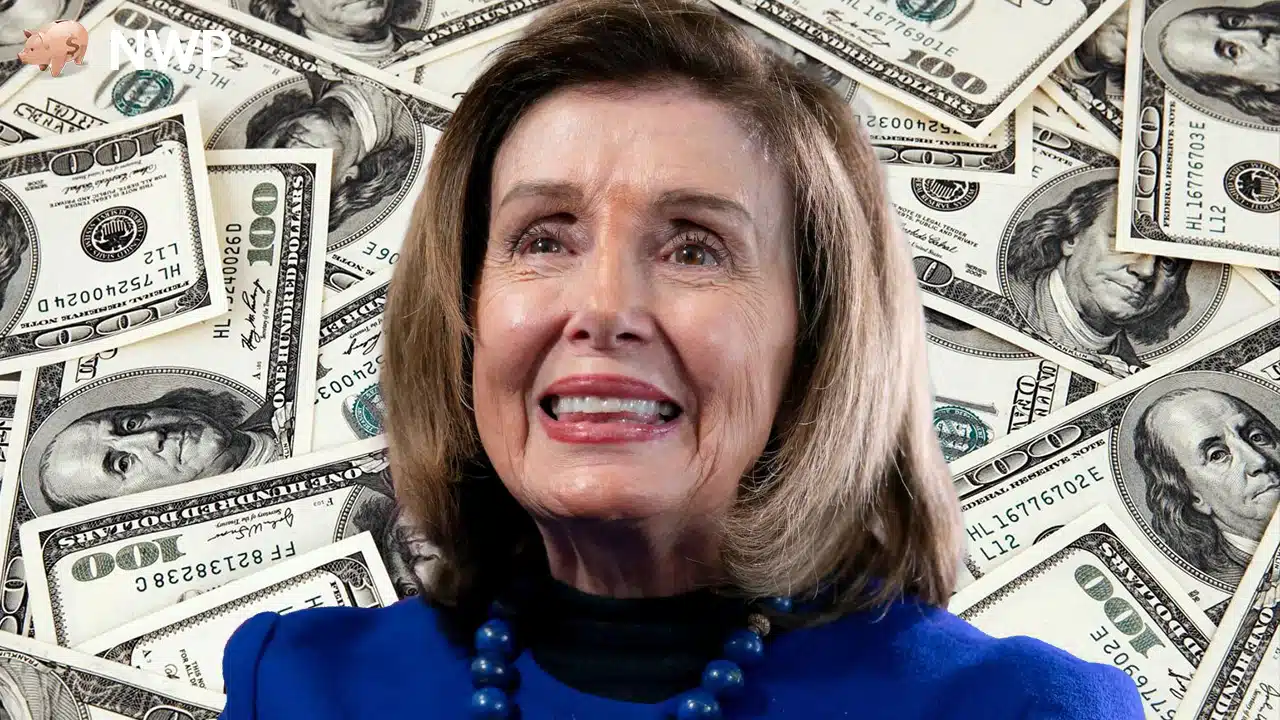
Origins & Wealth‑Building
Paul Pelosi’s career and early investments
Paul Pelosi grew up in San Francisco and attended Malvern Preparatory School and later Georgetown University. After marrying Nancy in 1963 he founded Financial Leasing Services (FLS), a private investment consultancy that combines venture‑capital and real‑estate investing. A profile in People magazine notes that FLS’s portfolio includes stakes in major technology companies “like Facebook, Google, Amazon, Apple and Microsoft,” and that Paul is also a notable property investor[source]. By 2009 FLS and Paul’s personal holdings included office buildings in San Francisco and other California cities, a Napa Valley vineyard, a resort hotel, an Italian restaurant chain and a golf club[source]. In the same interview Paul said he deliberately avoids business deals that could conflict with his wife’s political role, saying he has a “good radar” for what might be inappropriate and has “religiously steered away from anything that would look controversial”[source].
Nancy Pelosi’s political rise
Nancy Pelosi entered Congress in 1987 and rose through the Democratic leadership to become the first woman to serve as Speaker of the House. According to her official biography she represented California’s 11th congressional district and has helped pass major legislation such as the Affordable Care Act, the American Rescue Plan and the Inflation Reduction Act[source]. Her congressional salary peaked at $223,500 while serving as Speaker and is currently $174,000 as a rank‑and‑file member; she is entitled to a federal pension worth up to 80 % of her final salary (about $139,200/year)[source]. Pelosi’s office consistently states that she does not own individual stocks and that the transaction reports filed under her name relate to her husband’s trades[source].
Net‑Worth Evolution and Composition
Growth over time
Because congressional disclosures report broad value ranges rather than exact figures, estimates of the Pelosis’ net worth vary. OpenSecrets, using the midpoint of each range, calculated Nancy Pelosi’s 2018 net worth at about $114.7 million[source]. More recent estimates compiled by Quiver Quantitative and reported by Investopedia put the couple’s 2024–2025 net worth at “more than $240 million”[source]. These figures place the Pelosis among the wealthiest members of Congress and far above the approximate median net worth of around $1 million for members of Congress.
Wealth composition
Public filings and secondary analyses allow their wealth to be broken down into several categories:
| Category | Evidence & Range | Explanation |
| Real estate (commercial & residential) | FLS and personal holdings include office buildings in San Francisco and other cities; a St. Helena vineyard; a resort hotel and restaurant chain[source]. Quiver Quantitative estimates the couple’s real‑estate holdings at ≈ $45 million[source]. | Generates rental and partnership income; includes mortgages and lines of credit. |
| Technology equities | Filings show large positions in Apple valued between $25–50 million and holdings in Microsoft, Salesforce, Alphabet/Google and Amazon, each valued between $5–25 million[source]. The portfolio also contains options on companies like Nvidia and Palo Alto Networks[source]. | Represent the high‑growth component of their wealth and have delivered outsized gains during the tech boom. |
| Venture‑capital and private businesses | FLS invests in technology startups and hospitality ventures; the exact value is private but constitutes a significant share of the family’s wealth[source]. | Provides deal flow and early‑stage stakes but is opaque to outsiders. |
| Pensions and salaries | Nancy Pelosi earns an annual congressional salary and will draw a government pension worth up to ~80 % of her final salary[source]. | Provides stable income but forms a small share of total wealth. |
The bar chart below visualizes the estimated ranges of their largest reported holdings (values in millions of U.S. dollars). Real‑estate holdings are relatively stable while tech stocks span wide ranges because of disclosure bands. The high‑end values illustrate how large the tech component of their portfolio could be:
High‑Profile Trades and Controversies
Nvidia sale and other losses
The trade that drew the most attention occurred in July 2022. A periodic transaction report showed that Paul Pelosi sold 25,000 shares of Nvidia (worth about $4.1 million) on July 26, just days before Congress voted on the CHIPS Act. Reuters reported that the sale resulted in a $341,365 loss[source] and that Paul had previously bought 5,000 shares in July 2021 and exercised options on another 20,000 shares[source]. Drew Hammill, Pelosi’s deputy chief of staff, later said the shares were sold at a loss “to stop misinformation” about the transaction[source]. That sale—losing money rather than making it—undercuts claims that their trades always win.
A transparency filing published three months later showed that Paul sold call options in Nvidia and Micron for a combined loss under $1 million; the report disclosed losses of $361,476 on Nvidia options (purchased in July 2021) and $392,575 on Micron options (purchased in December 2021). The same report recorded that he exercised 200 call options in Alphabet/Google (worth roughly $2 million) and allowed Disney options to expire worthless.
Aggressive call‑option bets
The Pelosis are known for purchasing long‑dated call options—leveraged bets that a stock will rise. In November 2023, a periodic transaction report showed Paul Pelosi buying 50 call options on Nvidia (strike price $120, expiration Dec 20 2024). Investopedia notes that these options cost between $1–5 million and had gained around $5 million by mid‑2024 as Nvidia’s share price more than tripled[source]. Additional filings in June and July 2024 disclosed purchases of 10,000 shares of Nvidia each month, worth between $1–5 million[source]. These trades were widely circulated online, fueling speculation that the Pelosis had advance knowledge of artificial‑intelligence legislation.
However, the record also shows that not all bets pay off. Paul’s Roblox calls expired worthless in January 2023 (loss ≈ $303,000) and he realized similar losses on Tesla and Disney options. The Pelosis’ trading style therefore appears to be high‑beta rather than consistently profitable.
Viral accusations and fact‑checkers’ conclusions
Social media posts have repeatedly accused Nancy Pelosi of insider trading, but fact‑checkers find no evidence that she makes the trades herself or benefits from secret information. A Reuters fact‑check debunked a viral tweet claiming Pelosi bought millions of shares in a cannabis company; Reuters wrote that “no such report was published” and that Pelosi’s spokesperson confirmed no such transaction occurred[source]. PolitiFact similarly debunked a viral claim that Pelosi bought $1.25 million in Tesla stock the day before President Biden announced an electric‑vehicle order; the fact‑check found that Paul purchased 25 Tesla call options on Dec 22 2020, Pelosi disclosed the trade on Jan 21 2021 and Biden’s policy was public campaign rhetoric[source]. The fact‑check concluded that the post misrepresented both the timing and nature of the trade and noted that Pelosi has no involvement or prior knowledge of her husband’s transactions[source].
Meme culture and the “Pelosi tracker”
After the 2021 “meme stock” frenzy, the Pelosis’ trades themselves became a meme. A Reuters feature observed that “Google searches for ‘Pelosi stock trades’ hit a record high” and that Reddit, TikTok and other platforms began to monitor every periodic transaction report. Videos on TikTok with tens of thousands of likes highlighted Paul’s options purchases in Alphabet, Micron and Roblox. The Unusual Whales service even launched the “NANC” ETF, which invests based on Democratic lawmakers’ disclosures, and markets itself on the idea of following Pelosi’s trades. While the ETF has outperformed the S&P 500 since its February 2023 launch, its marketing underscores how the Pelosis’ trades have become a cultural phenomenon rather than proof of wrongdoing.
Financial Strategies & Risk Profile
Strategy: barbell of real assets and high‑beta tech
The couple’s portfolio resembles a barbell: one side is anchored by income‑producing real estate and hospitality ventures, and the other by high‑beta technology stocks and call options. FLS’s property holdings and the Napa vineyard generate steady rents and agricultural income[source]. The tech sleeve, by contrast, concentrates in Apple, Microsoft, Nvidia and other large‑cap growth stocks[source] and uses long‑dated call options to magnify gains. This aggressive positioning has produced notable winners (e.g., Nvidia 2023–24 calls) but also large losses (e.g., Nvidia and Micron option sales in 2022, Roblox options expiring worthless).
Comparison to congressional peers and legislative context
In 2018 Pelosi’s estimated net worth (~$114.7 million) ranked among the top ten in Congress[source], vastly higher than the median member. The concentration in tech stocks is unusual but not unique; other wealthy members such as Senator Mark Warner (venture‑capital fortune) and Senator Dianne Feinstein (real‑estate fortune) also hold assets far above the typical legislator. Pelosi’s trades attracted more attention because she served as Speaker and her husband executed large, high‑profile transactions in companies subject to federal regulation.
The STOCK Act of 2012 makes it illegal for lawmakers to use non‑public information for personal gain and requires disclosure of transactions within 45 days. A Reuters article reported that Pelosi said in January 2022 she was “OK” with legislation banning member stock trades if the House wanted it[source]. She later endorsed the HONEST Act in July 2025, a bill that would bar members of Congress, their spouses and senior executives from trading stocks, and stated that strong transparency and enforcement were critical[source]. The shift underscores how public pressure and perception, rather than proven misconduct, shaped legislative momentum.
Public Perception vs. Evidence
Narrative vs. reality
Critics argue that the Pelosis have “made a fortune off insider info.” Yet the public record shows a more nuanced picture:
- No direct evidence of insider trading: Fact‑checking organizations and Reuters note that there is no evidence Nancy Pelosi uses inside information; she does not trade stocks herself, and her husband’s trades are disclosed as required[source]. Claims about cannabis, Tesla and other “insider” trades have been repeatedly debunked[source].
- Mixed performance: The Pelosis’ portfolio includes substantial losses (e.g., the 2022 Nvidia sale at a $341k loss[source], Micron/Nvidia option losses) alongside big winners (e.g., the 2023 Nvidia calls). Such volatility is consistent with a high‑risk strategy, not guaranteed market beating.
- Optics matter: The timing of trades near legislative debates (e.g., the CHIPS Act) creates an appearance problem even when no rule is broken. The 45‑day reporting window means the public only learns about transactions weeks after they occur, further fueling speculation. This perception has driven calls for tighter rules and the emergence of a “Pelosi tracker” meme.
Conclusion
The available evidence suggests that the Pelosis’ wealth stems from decades of real‑estate investing, venture‑capital stakes and aggressive equity positions, not from illicit access to legislative secrets. Paul Pelosi’s Financial Leasing Services has invested in tech and hospitality since the 1970s[source], and the couple owns substantial commercial properties and a vineyard[source]. Their tech‑heavy stock portfolio has produced both spectacular gains and notable losses. Fact‑checkers repeatedly emphasize that Nancy Pelosi does not trade stocks herself and there is no verified evidence of insider trading[source]. Nevertheless, the scale of their trades and the timing relative to policy debates have created a powerful narrative that resonates on social media and has inspired financial products. The Pelosis’ case illustrates the tension between a legal right to invest and the public’s expectation that elected officials avoid even the appearance of profiting from their positions. As of September 2025, legislation to ban or severely restrict congressional trading is advancing with bipartisan support[source][source]—a sign that optics and trust can matter as much as law.





Leave a Comment