

Early Life: From Sharecropper’s Son to Gospel Music Roots
Robert Finley was born on February 13, 1954, in Winnsboro, Louisiana, and grew up in the small town of Bernice[thebluegrasssituation.com][musicmaker.org]. One of eight children in a sharecropping family, Finley came of age in the Jim Crow South, often working in cotton fields with his family[thebluegrasssituation.com]. Music was a bright spark in his difficult childhood. Finley’s parents permitted only gospel music at home, and young Robert was inspired watching gospel quartets perform – he would always grab a front-row seat and study the guitarists’ fingers[en.wikipedia.org]. At age 11, he took money meant for new shoes and instead bought a guitar from a thrift store, teaching himself to play and writing songs from an early age[musicmaker.org]. Influenced by church music and soul legends like James Brown, he discovered a natural gift for music and entertaining. Finley later recalled performing in an elementary school talent show and imitating James Brown dance moves (much to the demise of his shoes) – an early sign that he “wanted to be an entertainer from childhood”[bluesblastmagazine.com][bluesblastmagazine.com].
Tragedy struck during Finley’s youth when his father died, leaving the family in hardship[americana-uk.com]. Finley dropped out of school in the 10th grade to earn a wage and help support his mother and siblings[thebluegrasssituation.com]. By his late teens, with limited opportunities in the rural South, Finley turned to the military not only out of duty but economic necessity. In 1970, at age 16 (lying about his age, by some accounts[bluesblastmagazine.com]), he joined the U.S. Army during the tail end of the Vietnam War[en.wikipedia.org]. Originally trained as a helicopter technician, Finley was stationed in Germany, but a twist of fate – or what he calls “the hand of God” – set him on a musical path even in the service[thebluegrasssituation.com][thebluegrasssituation.com]. The Army band in need of a guitarist soon “discovered” his talent, and Finley became the bandleader, touring American bases across Europe and entertaining troops[en.wikipedia.org][musicmaker.org]. For the next few years, he honed his craft playing soul and R&B covers (Joe Simon, Marvin Gaye, B.B. King, etc.) for enthusiastic GIs and European locals, learning how to captivate an audience night after night[musicmaker.org][musicmaker.org]. This period was formative – as Finley later said, “everything I had learned has been paying off…working with different musicians all the time in the military, I could perform with pretty much anybody”[bluesblastmagazine.com][bluesblastmagazine.com].
Post-Military Life: Carpenter by Day, Musician by Night
After his discharge, Finley returned home to Louisiana in the mid-1970s[thebluegrasssituation.com][thebluegrasssituation.com]. He initially tried to keep a band going back home, leading a gospel-soul group called Brother Finley and the Gospel Sisters, and busking on street corners whenever possible[en.wikipedia.org]. However, the transition to civilian life brought new challenges. The local musicians he found weren’t as disciplined as his Army bandmates, and organizing a band proved “thankless and unsustainable” as a livelihood[musicmaker.org][americana-uk.com]. To make ends meet for his growing family – he had married and would become a father – Finley took up work as a carpenter, a trade at which he was highly skilled[aarp.org]. For decades, he built and renovated homes around Union Parish while playing music on the side whenever he could, such as in church on Sundays. (In fact, he served as a church guitarist for 20 years at New Hope Baptist in Bernice, keeping his musical spirit alive in the pews[bluesblastmagazine.com].) Finley’s dream of a music career never died, but supporting his wife and children always came first[aarp.org]. He would later say he “put my music dreams on hold to support [my] family” as a working man[aarp.org].
Through the 1980s and 1990s, Finley was a fixture in his community – known as a talented local guitarist and singer – but he remained far from fame. He played on front porches, at small gigs, or for anyone who would listen. “Without the fans, you’re nothing…you’ve got to convince the people you’re worth their investment,” Finley noted, reflecting on those humble years[musicmaker.org]. By his early 60s, he was a grandfather (ultimately a great-grandfather) and may have thought his chance at musical “stardom” had passed. Little did he know, his biggest break was yet to come, born from a dark turn of events in his life.
Going Blind: Setbacks and a Turning Point
Around 2014, in his late 50s, Robert Finley began to suffer serious vision problems. He noticed his eyesight failing – he had trouble seeing his carpentry measurements and clients’ faces. In short order, a cascade of personal misfortunes hit. Finley “was struck by a series of setbacks”: he went through a divorce, then lost his home and belongings when his house (and trailer) burned down in a fire, and finally his vision deteriorated to the point he had to quit working[krtv.com][krtv.com]. By age 60, Finley was declared legally blind due to glaucoma[aarp.org][aarp.org]. The glaucoma had crept up slowly and was diagnosed too late to save his sight – a cautionary tale, as glaucoma is common in seniors but often untreated until advanced[aarp.org]. For a man who made his living with his hands and eyes, these losses were devastating. Finley not only lost his ability to drive and work as a carpenter, but he also faced near-total vision loss (“almost completely blind” by 2019)[krtv.com][krtv.com].
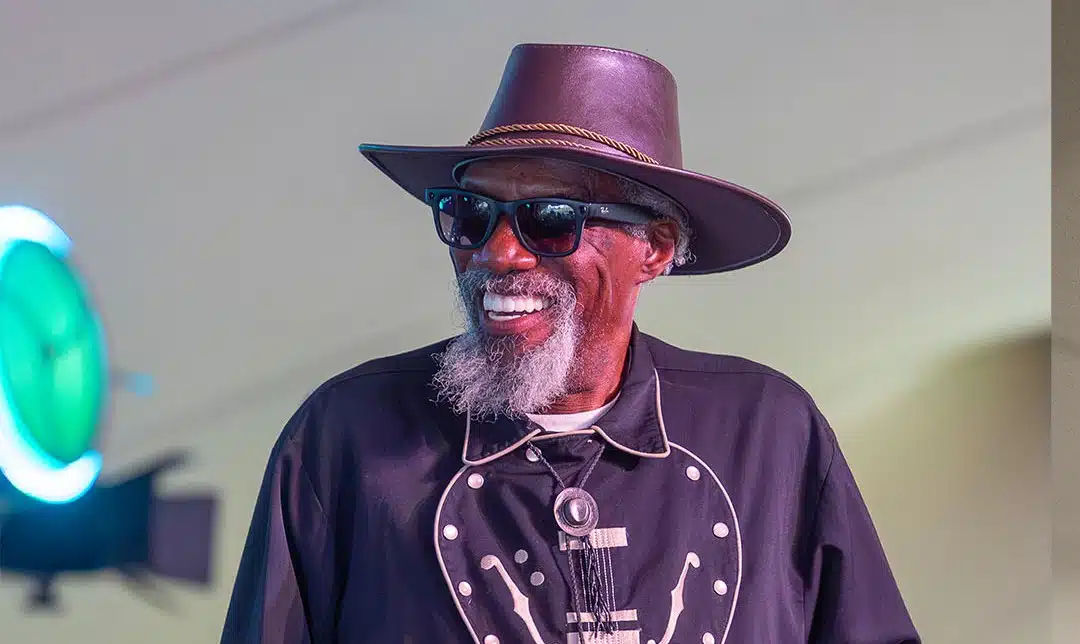
Yet, in this very low point, Robert Finley found a new purpose. He has often said that “sometimes the bad thing brings out the best thing”[aarp.org] – and in his case, losing his sight forced him to truly “see” what his destiny was. “I had to lose my physical sight so I could see my true destiny,” he told audiences[krtv.com]. No longer able to swing a hammer, Finley picked up his guitar with renewed determination. Music, once a sideline, became his salvation. In his own words, “going blind…gave me a new lease on life. I began to play music again – it made me reach inside to find myself. It’s like I’m 65 and just coming alive”[aarp.org]. With characteristic resilience, Finley did not wallow in self-pity for long. Instead, he hit the streets – literally – singing and playing wherever he could to make a few dollars and lift his spirits. He could be found busking on sidewalks in the South, dressed in his sharp black hat and bright suits, with an infectious smile that belied his troubles[musicmaker.org][musicmaker.org]. Unbeknownst to him, these impromptu street performances would change the course of his life.
Musical Rebirth: Discovery by the Music Maker Foundation
In 2015, while playing at the King Biscuit Blues Festival in Helena, Arkansas – a famed gathering for blues performers – Robert Finley caught the attention of the Music Maker Relief Foundation, a non-profit that supports aging roots musicians[en.wikipedia.org][thebluegrasssituation.com]. Finley had traveled to the festival on a whim (and a prayer), hoping to jam and be heard. He ended up busking outside a venue, and passersby took notice of the “gangly, graceful” middle-aged bluesman with the soulful voice[musicmaker.org][musicmaker.org]. Music Maker founder Tim Duffy spotted him (even snapping a close-up photo that made Finley a bit uncomfortable[bluesblastmagazine.com][bluesblastmagazine.com]) and was “thrilled by his sound”, sensing that Finley had raw talent and a story worth supporting[thebluegrasssituation.com]. They invited Finley into the Music Maker fold, offering him small stipends and opportunities to perform on their curated blues tours alongside other elder statesmen of blues like Robert Lee Coleman and Alabama Slim[en.wikipedia.org][thebluegrasssituation.com].
With Music Maker’s help, Finley recorded a few songs and was soon in a proper studio for the first time in his life. In late 2016 – at the age of 62 – he released his debut album Age Don’t Mean a Thing on Big Legal Mess Records (an imprint of Fat Possum)[en.wikipedia.org]. The album’s title was a defiant statement of Finley’s new chapter: he was living proof that it’s never too late to chase a dream. Finley wrote most of the songs on the record, including the autobiographical title track, and imbued them with a classic Southern soul and blues feel[en.wikipedia.org][en.wikipedia.org]. Backed by veteran Memphis session players (the Bo-Keys) and produced by Bruce Watson and Jimbo Mathus, Finley’s Age Don’t Mean a Thing announced him as an authentic new voice on the scene[en.wikipedia.org]. Critics in roots music circles were highly receptive, praising Finley’s “soul-drenched vocals” and the refreshing sincerity of his sound[yahoo.com][en.wikipedia.org]. OffBeat Magazine called the then-63-year-old’s debut “revitalizing…Southern soul”[en.wikipedia.org]. Finley’s life had indeed reached an artistic rebirth – or as one review noted, “Making his debut at 63, bluesman Robert Finley says ‘Age Don’t Mean a Thing’”[en.wikipedia.org].
Just as important as the album itself, Age Don’t Mean a Thing set off a chain of events connecting Robert Finley with people who would elevate his career to even greater heights. One of those people was Dan Auerbach, frontman of rock band The Black Keys and a noted producer with a passion for blues and soul. Auerbach’s friend (possibly Watson or another contact) sent him a clip of Finley performing, which immediately impressed the young rock star[americana-uk.com]. “I realized very quickly Robert’s capable of so much more than old blues songs,” Auerbach later said. “He could do a wide range of things… set him in front of an orchestra and he would sing just as good as Ray Charles on the first take.”[americana-uk.com] That endorsement was no small praise. In early 2017, Dan Auerbach invited Finley to Nashville to collaborate on a project that was somewhat unusual: writing a soundtrack for a graphic novel. Together, they co-wrote and recorded songs for Murder Ballads, a comic book by Z2 Comics, giving Finley a chance to delve into swampy blues storytelling on tracks like the outlaw ballad “Bang Bang”[en.wikipedia.org][en.wikipedia.org]. Finley’s powerful voice and real-life gravitas fit the material perfectly[en.wikipedia.org].
Breakthrough with Dan Auerbach: Goin’ Platinum! and World Tours
Impressed with Finley’s talent, Dan Auerbach didn’t stop at the comic soundtrack. He signed Finley to his own label, Easy Eye Sound, and personally produced and co-wrote Finley’s next album[en.wikipedia.org]. In December 2017, Finley released Goin’ Platinum! – an album title winking at the notion of a 63-year-old bluesman suddenly shooting for the charts[en.wikipedia.org]. This record was a far more high-profile effort, released via Easy Eye/Nonesuch Records with Auerbach’s star power behind it[en.wikipedia.org]. Auerbach assembled an all-star studio band of seasoned soul musicians (including icons like guitarist Duane Eddy and pianist Bobby Wood), and even enlisted top songwriters like John Prine and Nick Lowe to co-write some tracks[americana-uk.com][americana-uk.com]. Finley remained the soulful “vocal anchor” of the project[americana-uk.com][americana-uk.com], delivering chest-thumping soul on songs like “Medicine Woman” and “Get It While You Can.” The latter is a funky, bacon-fat-sizzling romp that became one of Finley’s signature tunes[yahoo.com][yahoo.com]. Critics hailed Goin’ Platinum! for its vintage vibe and Finley’s emotive voice – Rolling Stone lauded Finley as Auerbach’s “favorite singer” and noted that he “lost his wife, his house and his vision – before becoming the undisputed star of [Auerbach’s] Easy Eye Sound Revue”[rollingstone.com]. Indeed, Auerbach took Finley on the road in 2018 as the standout performer in the Easy Eye Sound Revue, a showcase tour featuring acts from his label. Night after night, Finley won over audiences with his roaring voice and showmanship, often decked in colorful suits and dark glasses, moving with the music as if guided by pure feeling. His voice, Simon Cowell later remarked, had aged “like the finest wine”, gaining character and depth over time[aarp.org].
Following the Revue tour, Robert Finley embarked on his own headlining shows. Remarkably, this Louisiana sharecropper’s son who once never dreamt of traveling widely found himself performing around the world – from U.S. clubs and blues festivals to theaters across Europe[thebluegrasssituation.com][thebluegrasssituation.com]. In late 2018, Finley made his first trip to the U.K., playing London, Leeds, and Manchester to enthusiastic crowds[americana-uk.com]. British and European audiences, who have long revered classic American blues and soul, embraced Finley’s story and music. The UK press highlighted his “incredible back story, piercing voice and guitar playing skills” and noted the critical acclaim of Goin’ Platinum![americana-uk.com][americana-uk.com]. As one preview put it, Finley’s “fascinating back story” – from Army service to blindness and late-life success – only amplified the impact of seeing him belt out songs live[americana-uk.com]. Fans abroad seemed to appreciate the authenticity and heritage he represented: an “American blues and soul singer” carrying the torch of a genre whose early masters are mostly gone. Finley’s performances overseas were met with standing ovations and calls for encores, proving that heartfelt blues knows no borders. He took to social media to thank his new international fans for the “warm welcome” and often said he never imagined he’d be “visiting places and doing what I’m doing now” at his age[thebluegrasssituation.com][thebluegrasssituation.com].
Back in the U.S., Finley was becoming a hero especially to older music lovers who saw in him a validation that it’s never too late to shine. His second act was inspiring not just for its feel-good narrative, but for the musical quality he delivered. As Auerbach observed, Finley could croon a soul ballad or growl a blues rocker with equal ease, making him hard to pigeonhole by genre[thebluegrasssituation.com]. Finley himself shrugged off labels – blues, soul, gospel – and credits “the hand of God” for guiding him through each twist in his life[thebluegrasssituation.com]. His passionate faith often comes up in interviews, and he infuses songs with that church-born fervor. This spiritual outlook perhaps helped him remain humble and optimistic despite fame. “Here I am at my age, just now fulfilling my childhood dream,” he said around this time. “See, you’ve got to hold to your dream; age don’t mean a thing”[musicmaker.org][musicmaker.org].
America’s Got Talent: National Spotlight and Public Inspiration
In 2019, Robert Finley’s improbable journey took yet another turn – onto national primetime television. At 65, Finley became a contestant on America’s Got Talent (AGT) Season 14[en.wikipedia.org]. It was a risky move: a down-home bluesman competing on a show known for flashy young performers. But Finley saw AGT as a “dream happening”, another chance to share his music with the widest possible audience[thebluegrasssituation.com]. When his participation was announced on social media, fans of the show were intrigued by the “blind Vietnam War veteran” with a guitar and a dream[en.wikipedia.org]. Finley’s televised audition, aired July 9, 2019, proved to be a show-stopper. Walking on stage led by host Terry Crews (due to his blindness), Finley introduced himself with a line that gave everyone chills: “I had to lose my sight to find my vision.” He then launched into an original song he wrote, the upbeat soul number “Get It While You Can”[krtv.com][krtv.com].
The reaction was electric. As soon as Finley’s deep, raspy voice rang out with the lyric “You got to get it when you can, wrap it up in bacon, sizzle it in your pan!”, the studio audience erupted in cheers[yahoo.com][yahoo.com]. The judges were on their feet dancing – even the tough-to-please Simon Cowell broke into a smile, swaying like a self-described “heart-eyes emoji”[krtv.com][krtv.com]. Julianne Hough told Finley, “You might not be able to see us, but I hope you can feel us,” referring to the love and energy filling the room[krtv.com]. In that moment, millions of TV viewers witnessed the joy that Robert Finley exuded on stage. His face lit up as he sang, and he moved with a confidence that belied his lack of sight – a testament to decades of performing experience and a true passion for music. Cowell was visibly enamored, later comparing Finley’s voice to an aged fine wine that had only gotten better with time[aarp.org]. The judges unanimously voted “Yes” to send him through. Howie Mandel did voice one concern: would younger viewers connect with a sexagenarian singing old-school soul?[aarp.org][aarp.org] But Finley soon proved that good music and a great story can bridge generations. He advanced through the competition week by week, delivering another rousing original called “Medicine Woman” in the Judge Cuts, and ultimately reached the semifinals – an impressive run for a niche blues artist on a mainstream stage[aarp.org][aarp.org].
Although he didn’t win the $1 million prize, Finley emerged from AGT as a winner in more important ways. The exposure introduced him to millions of Americans who might never have stepped into a blues club. His life story was highlighted in touching video segments on the show: viewers learned how he “found his voice after losing his eyesight”, how he was a Vietnam veteran, a sharecropper’s son, a grandfather, and how music redeemed him[krtv.com][krtv.com]. This narrative of perseverance struck a chord. AGT’s older viewers, in particular, found him deeply inspiring – finally, a contestant their age making it big, and on his own terms. As AARP noted, Finley became “decidedly one of the most inspiring [contestants] for grownup viewers”[aarp.org]. His success also shone a spotlight on glaucoma awareness and the challenges of adult vision loss[aarp.org]. In fact, Finley has since used his platform to urge others over 60 to get their eyes checked, noting that he might have saved some sight had he caught the disease earlier[aarp.org].
Culturally, Finley’s AGT appearances reinforced the notion that American roots music still has broad resonance. In a pop landscape dominated by teen stars and digital beats, here was an older Black man singing the blues – and the prime-time audience loved it. It was a reminder of the enduring power of American roots music traditions in modern pop culture. Finley’s songs, steeped in blues, soul, and gospel, felt fresh and authentic even to younger ears. The social media buzz around his performances was huge; clips of his audition garnered millions of views on YouTube and Facebook within days, accompanied by comments like “legend,” “goosebumps,” and “proof that soul never ages.” Many viewers said Finley’s story brought them to tears and motivated them to “never give up on dreams”. As one headline put it, “Blind Vietnam War Vet Wows ‘America’s Got Talent’ Judges”[yahoo.com] – but he also wowed the public, who voted him through several rounds. Even after AGT, fans continued to follow his journey. Finley found himself with a broadened fanbase: long-time blues aficionados, plus new admirers of all ages who discovered him on the show.
Life After AGT: Albums, Tours, and Influence
After America’s Got Talent in 2019, Robert Finley leveraged his raised profile to further his music career. He returned to the studio with Dan Auerbach to craft his next album, determined to capitalize on the momentum. In May 2021, Finley released Sharecropper’s Son, a highly personal album that dives into his own life story[en.wikipedia.org][en.wikipedia.org]. As the title suggests, it chronicles his upbringing on a Louisiana farm and the lessons of hard work and faith instilled in him. Finley, at 67, poured decades of experience into songs like “Country Boy” (about toiling for little gain in the cotton fields) and “Souled Out on You” (a soulful number seemingly reflecting the end of a relationship, possibly his divorce)[thebluegrasssituation.com][thebluegrasssituation.com]. Sharecropper’s Son was again produced by Auerbach and recorded with top-notch musicians – including blues guitarist Kenny Brown and even Auerbach’s Black Keys bandmate Patrick Carney on drums[en.wikipedia.org]. Critics hailed the album as “career-defining” and noted that Finley’s voice had only grown more authoritative with time, capable of “poignant storytelling, killer instrumentation, and a whole ton of soul”[concord.com][rockandbluesmuse.com]. Mojo magazine praised the record for “dig[ging] deep into life on the bayou”, and Rolling Stone featured Finley’s single “Souled Out on You” as a testament to his continued vitality[en.wikipedia.org]. The album also underlined Finley’s place in the continuum of American music – blending blues, gospel, and rock in a way that felt like a bridge between generations.
By this point, Finley had become something of a folk hero for perseverance. Fans at his shows would often tell him that his story inspired them to face their own challenges – whether it be illness, disability, or simply fear of getting older. Finley embraces this role. He often pauses during sets to deliver a message of hope, telling audiences that “you’re never too young to start dreaming… and you’re never too old for your dream to come true”[aarp.org]. His triumphant late-career has also contributed to conversations about disability in music. Alongside legendary blind artists like Ray Charles and Stevie Wonder, Finley stands out because he lost his sight later in life and still forged ahead. On AGT he quipped, “I’m 65 and just coming alive”, encapsulating how a disability might close one door (his carpentry career) but open another[aarp.org]. In interviews, he’s frank about the adjustments: he can no longer build houses, but he jokes he “can still tear them down”[musicmaker.org]. On stage, he sometimes needs a guiding hand (often one of his children or bandmates leads him out), yet once the music starts, he navigates by intuition. He has learned to “feel” the audience’s energy even if he can’t see their faces[krtv.com]. This wholehearted performing style – dancing, clapping, roaming the stage carefully but confidently – has challenged stereotypes about what blind performers can do. Finley’s success has been encouraging to other artists facing late-in-life hurdles, reinforcing that creativity and talent don’t have an expiration date.
In 2023, Finley continued his artistic roll by releasing his fourth album, Black Bayou, again via Easy Eye Sound. This record (his third collaboration with Auerbach) delved into swampy blues-rock and even featured story-songs about Louisiana life and lore. By now in his early 70s, Finley showed no signs of slowing – his voice on Black Bayou was as fiery as ever, leading one reviewer to call him “the greatest living soul singer” in contemporary blues[concord.com][tinnitist.com]. To support the album, Finley embarked on extensive tours, including a fall 2024 headline tour across the U.K. and Europe[facebook.com][instagram.com]. He made festival appearances (such as Ireland’s Forest Fest in 2025, where he was joined onstage by his daughter for a special moment) and earned new fans abroad who marveled at his energy and authenticity[instagram.com]. In the U.S., he’s been featured at blues and roots music festivals, often as a headliner alongside younger acts who view him with reverence. Music critics note that Finley’s presence in the industry highlights the continuing relevance of blues and soul in modern times – genres that often get sidelined in the age of hip-hop and EDM, but which retain a devoted following and profound cultural importance[thebluegrasssituation.com][thebluegrasssituation.com]. Finley’s work, especially on Sharecropper’s Son and Black Bayou, connects the heritage of African-American blues with contemporary production and storytelling, effectively “reinvigorating” the idiom for new audiences[pbs.org][facebook.com].
The Economics of a Bluesman’s Journey in the 21st Century
Robert Finley’s career resurgence also offers insight into the economic realities of modern music. As an older artist in a niche genre, Finley is not selling out basketball arenas or topping the Billboard Hot 100. Instead, he has carved out a sustainable career through a mix of streaming, record sales, and especially live performances. In the streaming era, even traditional blues artists have a chance to reach global listeners. Finley’s songs have been added to streaming playlists (Spotify even featured him on a cover of a blues playlist), helping him gain younger listeners worldwide[facebook.com]. However, streaming royalties alone are modest, so Finley’s income, like that of most musicians today, relies heavily on touring and live shows. Fortunately, his AGT fame and critically acclaimed albums opened lucrative touring opportunities: he’s played not only clubs but also larger venues as an opener for artists like The Black Keys, and at major festivals. These gigs pay dividends both financially and in growing his fanbase.
Finley has also tapped into the vinyl revival – many fans buy his records on vinyl and CD, which provide better margins than digital streams. His album Sharecropper’s Son was marketed as a “career-defining” record and likely saw solid sales among blues aficionados[concord.com]. In addition, Finley’s compelling backstory has made him a favorite in the Americana and blues press, generating media coverage that acts as free publicity. All of this has translated into a much-improved financial situation for Finley compared to his pre-discovery days. In fact, by 2024 some estimates pegged Robert Finley’s net worth around $500,000 – a tangible measure of how far he’s come from the brink of homelessness just a decade prior[robert-finley-net-worth.pages.dev]. This number (while unofficial) reflects income from record deals, touring, merchandise, and perhaps licensing of his songs. While he’s not a millionaire, Finley now enjoys a level of comfort and security that was unimaginable during the darkest days when he lost his home and eyesight. He continues to live in Bernice, LA, in his community, stating happily, “Why would I go anywhere else?”[thebluegrasssituation.com]. By staying in his hometown, Finley also ensures that the economic benefits of his success (like homeownership, local spending, etc.) feed back into the community that raised him.
It’s worth noting the cultural economics at play as well. Finley’s rise coincided with a growing popular appetite for authentic roots music experiences – perhaps as an antidote to the slick, digital nature of much pop. Live blues and soul music offer a human connection that streaming algorithms can’t duplicate. Promoters have found that Finley’s shows draw a multigenerational crowd: older fans who relate to his life story, and younger fans curious to witness a living bluesman carrying tradition forward. In this sense, Finley benefits from the experience economy of music today – people are willing to pay for the unique experience of seeing a seasoned soul singer testify in person. And he delivers: reviewers often remark that Finley’s singing “is as primal as an alligator and sweeter than sugar”, with showmanship honed over a lifetime[youtube.com].
The COVID-19 pandemic in 2020 was a hurdle for all performers, Finley included – live gigs vanished for a time. But he used that period to write and record (much of Sharecropper’s Son was prepared during that time), and as soon as stages reopened, he was back, hungry to perform. In one interview, Finley said he “could drop a quarter and might hurt to bend over and pick it up…but if the music’s playin’ and the crowd is screamin’, I feed off the crowd”, emphasizing that his drive to entertain overcomes even physical aches[bluesblastmagazine.com][bluesblastmagazine.com]. That sums up his approach: music is not just a job or even a passion, but almost a lifeblood that energizes him.
Legacy and Cultural Impact: Resilience, Roots, and Inspiration
Robert Finley’s story is far more than an individual success tale – it carries broader cultural significance. As a Black artist born in the segregated Deep South, Finley embodies the trajectory of American roots music across the 20th and 21st centuries. He went from singing sharecropper work songs and church hymns in the 1960s, to absorbing soul and funk in the 1970s, to finally recording and sharing that accumulated heritage with the world in the 2010s and beyond. In an era when the originators of blues and soul are passing on, Finley has emerged as an elder statesman who can tell those stories through song. “His voice has a power and authority that come from voicing experiences many only read about in history books,” one journalist wrote, noting how Finley’s life – growing up in rural poverty, living through segregation, serving in war, working with his hands, overcoming disability – gives him a depth of perspective that enriches his music[thebluegrasssituation.com][thebluegrasssituation.com]. Finley’s 2021 album even literally educates listeners on those experiences, with lyrics painting vivid scenes of life in the Jim Crow South[thebluegrasssituation.com]. In this way, he has become a torchbearer of American roots heritage, bringing classic blues and soul into contemporary consciousness not as museum pieces, but as living, evolving art. Modern pop culture often recycles elements of blues (from rock guitar riffs to R&B vocal runs), but Finley presents the genuine article, reminding audiences where it all comes from.
Equally important is the theme of resilience that radiates from Finley’s journey. In interviews and on stage, he exudes positivity and gratitude. Despite facing more hardships than many people see in a lifetime – poverty, racism, war, injury, marital breakdown, losing one of the fundamental senses – Finley remains, in the words of one writer, “one of the most upbeat, optimistic people you could ever hope to meet”[thebluegrasssituation.com][thebluegrasssituation.com]. He harbors no bitterness; instead he channels pain into art. This attitude has influenced fans deeply. On blues forums and fan pages, people frequently cite Finley when discussing late-in-life reinvention or coping with disability. His mantra of “don’t ever let somebody tell you what you can’t do” carries weight because he’s lived it[musicmaker.org]. Furthermore, Finley’s cross-generational friendship with Dan Auerbach (a white rock musician 30 years his junior) sends a hopeful message about bridging cultural and age divides through music[thebluegrasssituation.com][thebluegrasssituation.com]. Their collaboration underscores how American music is a shared language that can unite people from different backgrounds – a young Ohio rocker and an old Louisiana bluesman finding common ground in the studio and on tour.
In the aftermath of his rise, Finley has also engaged in some philanthropy and community work. He remains connected with Music Maker Relief Foundation, occasionally performing at benefit events to help other struggling musicians as he once was helped[archive.musicmaker.org]. He speaks at schools and veteran events about the importance of arts and perseverance. Given his own military past, Finley has expressed solidarity with fellow veterans dealing with PTSD or life after service – showing by example that new passions can be found at any stage. He’s humble about his fame, often saying he’s just thankful to be able to do what he loves full-time. “You’ve got to love it to do it,” he told Blues Blast Magazine. “At the end of the day nobody can be you but you… If the audience can leave happier than they came, they’ll always come back.”[bluesblastmagazine.com][bluesblastmagazine.com]. That simple entertainer’s creed perhaps best explains why Robert Finley, against all odds, has achieved success: he makes people feel good, feel something real, through his music.
Today, in 2025, Robert Finley stands as a living testament to resilience and the enduring power of American roots music. He has attained a level of artistry that transcends the obstacles he faced. His journey from a farm in Jim Crow Louisiana, to an Army stage in Cold War Europe, to obscurity swinging a hammer, to finally a renowned bluesman lighting up global stages, reads almost like a modern folk tale. It’s a story of faith (both spiritual faith and faith in oneself), of artistry refined over a lifetime, and of the unbreakable spirit of a man who refused to let adversity have the last word. As Finley sings on his recent album, “I done been to the bottom, baby, and I made it to the top” – a lyric that rings true in every sense. His late-blooming career not only entertains but also teaches: it teaches us about the richness of American musical heritage, about bridging old and new, and about never giving up on one’s dreams. In Robert Finley’s soulful voice, many hear echoes of the past and inspiration for the future. And as he often reminds his cheering audiences, “Age don’t mean a thing!”[aarp.org][musicmaker.org] – a victorious shout from a man who is living proof.





Leave a Comment