

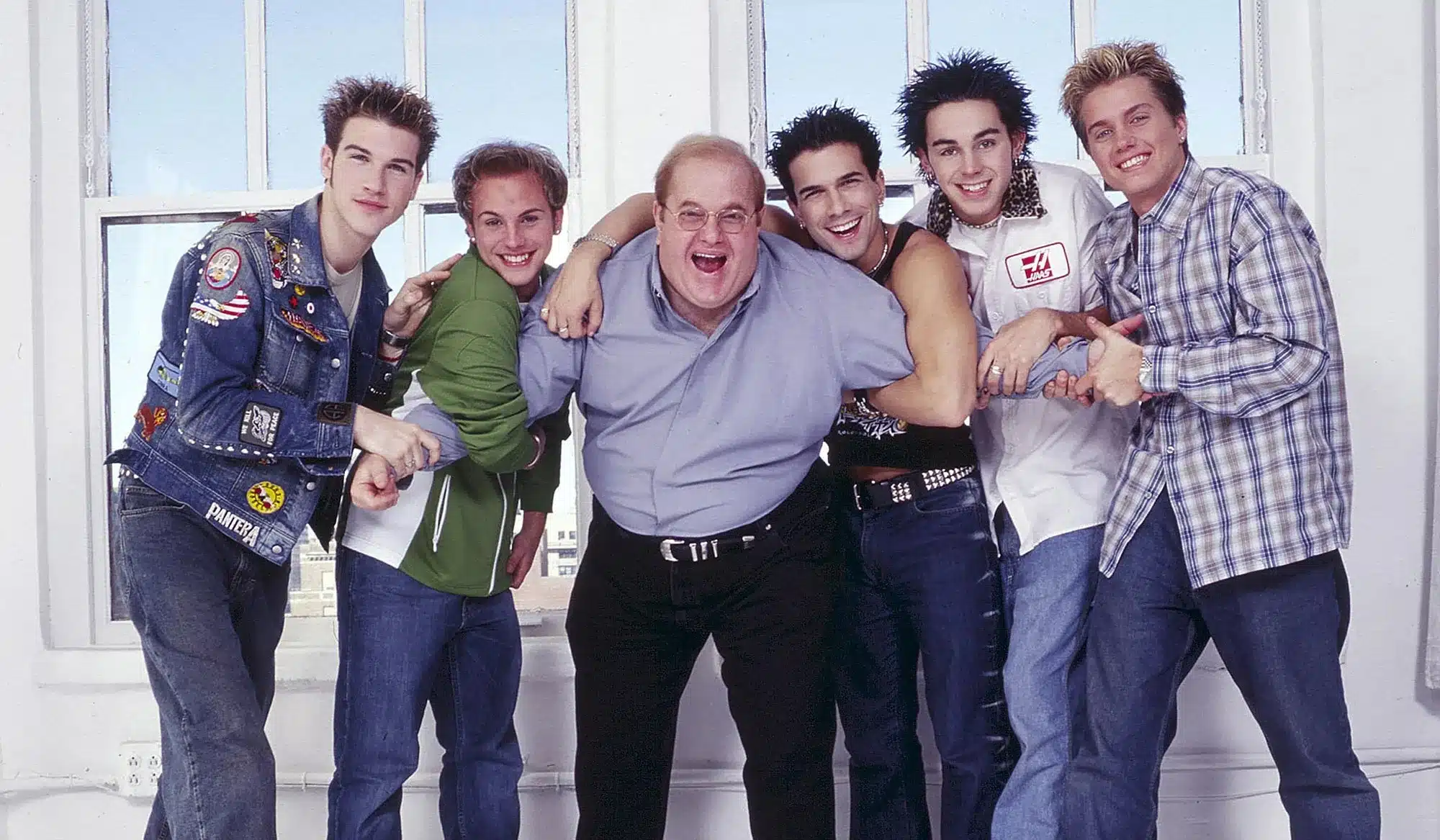
Origins & Rise: From Blimps to Boy‑Band King
Early ventures
Lou Pearlman grew up in Flushing, New York and developed an early fascination with airships. A 1993 Sports Illustrated profile described how the heavyset 10‑year‑old charmed a Goodyear crew into taking him on a blimp ride and then spent his teenage summers working for Goodyear crews[source]. While studying at Queens College he founded a helicopter commuting service, financed partly by his uncle Jack Garfunkel[source], and later formed Airship International Ltd. Early success was mixed. His first sponsored blimp for Jordache crashed on its maiden voyage in 1980 when the gold‑painted balloon overheated[source]. Undeterred, Pearlman raised roughly $3 million in 1985 through a penny‑stock offering for Airship International, a deal later described as a suspected “pump‑and‑dump” scheme[source]. The capital allowed him to buy additional blimps and sign high‑profile sponsors such as MetLife and SeaWorld[source], establishing Pearlman as an ambitious aviation entrepreneur.
Building credibility through entertainment
By the early 1990s Airship International was struggling—losses totalled $2 million in 1992 and $4 million in early 1994 and most of the company’s five blimps were grounded[source]. During a charter flight Pearlman was told that New Kids on the Block were grossing about $100 million a year, which led him to conclude he was “in the wrong business”[source]. In 1992 he placed a newspaper advert seeking “a New Kids on the Block look with a Boyz II Men sound” and assembled the Backstreet Boys[source]. He poured millions of dollars into the group while his aviation businesses continued to lose money[source]. The group’s breakthrough single in 1997 (“Quit Playing Games (With My Heart)”) sold two million copies[source], encouraging Pearlman to repeat the formula with NSYNC and later acts like O‑Town and LFO.
Pearlman controlled the acts through Trans Continental Records and a web of related entities. The acts were paid poorly—for example, the Backstreet Boys sued in 1998 alleging they had received only $300 000 collectively since 1993 while Pearlman had taken $10 million[source]. NSYNC filed a similar lawsuit in 1999 and eventually won the right to control their name[source]. Despite the lawsuits, Pearlman continued to leverage the groups’ fame to give his companies legitimacy.
Business Empire: Trans Con and a Web of Shells
Structure of the empire
Pearlman marketed a conglomerate under the Trans Continental brand: blimp leasing and charter flights, Trans Continental Airlines, Trans Continental Records, a talent agency, restaurants, real‑estate holdings and even a so‑called “employee investment savings account.” According to Forbes, his business cards unfolded to list 40–50 companies[source]. Most of these ventures existed only on paper or were grossly overstated; for example, Trans Continental Airlines never owned planes despite being used to impress NSYNC members[source]. The promise of diversity and the visibility of the boy bands convinced investors they were buying into a legitimate entertainment empire. O‑Town member Jacob Underwood told ABC News that the long list of subsidiaries made him believe he was “in with somebody really important”[source].
Financing the schemes
Pearlman raised capital in two principal ways:
- Stock sales in shell companies. Trans Continental Airlines Travel Services Inc. and Trans Continental Airlines Inc. issued shares promising future IPOs. The companies existed only on paper[source], yet Pearlman used phony financial statements from a fictitious accounting firm and a fake German bank to lend credibility to the shares[source]. The U.S. Office of the Comptroller of the Currency later noted that the false statements were a hallmark of a Ponzi operation[source].
- Employee Investment Savings Account (EISA). Pearlman marketed a high‑yield “FDIC‑insured” savings program through Trans Continental Airlines that promised 3–14 % returns[source]. In reality there was no FDIC insurance. Florida regulators said he collected over $100 million from more than 1 000 investors[source]. Sham “insurance certificates” and phoney audits from the made‑up firm Cohen & Siegel convinced investors the program was safe[source]. Funds were commingled across dozens of entities and used to pay commissions, repay earlier investors and support Pearlman’s lifestyle[source].
The table below summarises how $118 million collected between 2003 and 2006 was disbursed, based on records from Florida’s Office of Financial Regulation[source].
| Recipient/Use | Amount (USD) | Share of total |
| Louis J. Pearlman Enterprises (parent company and affiliates) | $34 million | 28.8 % |
| Other Pearlman‑controlled companies | $6.8 million | 5.8 % |
| Personal payments to Lou Pearlman | $4.2 million | 3.6 % |
| Investor withdrawals (incl. interest) | $43 million | 36.4 % |
| Sales agents’ commissions | $7 million | 5.9 % |
| Payments to Michael Crudele (Aegis Consulting) | $3.2 million | 2.7 % |
| Other transfers (e.g., Robert Fischetti, bank loans) | $1.2 million | 1.0 % |
| Unaccounted/remaining | ~ $18.6 million | 15.8 % |
The pattern typifies a Ponzi scheme: new money funded earlier withdrawals, while significant sums were siphoned to Pearlman and his companies.
Ponzi Scheme Mechanics
Recruiting investors
Pearlman leveraged the credibility of his boy bands to attract investors. ABC News reported that he hosted potential investors on private jets and at lavish parties featuring the Backstreet Boys or NSYNC[source]. Investors were shown glossy brochures and fake bank statements suggesting that the EISA accounts were insured by both the FDIC and Lloyd’s of London[source]. Because the Backstreet Boys and NSYNC were legitimately successful, most investors assumed the broader Trans Con empire was profitable.
Fake documents and regulatory blind spots
Pearlman created a fictitious accounting firm, Cohen & Siegel, and a bogus German bank, Bank of Friedensberg, to produce fraudulent financial statements[source]. These documents were supplied to investors, banks and credit‑rating agencies such as Dun & Bradstreet. When regulators tried to verify the audits, they found only an answering service at the address[source]. Pearlman successfully deflected regulators for more than a decade by mixing legitimate business receipts (boy‑band royalties, merchandise, touring income) with Ponzi inflows. This blending of truth and deception, trustee Soneet Kapila later wrote, allowed him to rebut allegations of fraud because there was always “just enough truth to discredit his accusers”[source].
Timeline of collapse
- 1998–1999 – Band lawsuits. Backstreet Boys and NSYNC sued over unfair contracts; Pearlman was ousted as manager and paid large settlements[source]. The lawsuits curtailed his legitimate income and increased his reliance on investor funds[source].
- 2003–2006 – Ponzi peak. Pearlman solicited more than $118 million through EISA accounts[source] while returning approximately $43 million to earlier investors and pocketing $38 million for himself and his businesses[source]. Regulators and investors remained unaware of the fraud.
- January 2007 – Scheme unravels. Florida regulators declared the EISA program a fraud, noting that more than $95 million was gone[source]. Courts appointed a receiver and froze Trans Continental assets. Pearlman fled overseas.
- June 2007 – Arrest in Bali. A tourist recognised him in Indonesia and alerted authorities. Pearlman was arrested and extradited to the U.S.[source].
- May 2008 – Guilty plea and sentencing. He pled guilty to conspiracy, money‑laundering and making false statements during bankruptcy proceedings. He admitted defrauding investors and banks out of hundreds of millions of dollars and using a fake accounting firm and bank[source]. U.S. District Judge G. Kendall Sharp ordered $300 million in restitution and sentenced him to 25 years in prison, offering a month off his sentence for every $1 million repaid[source].
- 2016 – Death in prison. Pearlman died of heart failure while serving his sentence.
Financial Peaks & Net Worth
Reliable estimates of Pearlman’s wealth are scarce because his assets and liabilities were intermingled across numerous entities. Nonetheless, court filings and interviews provide a rough trajectory:
| Period | Key developments | Estimated net worth/financial position | Evidence |
| Mid‑1990s | Backstreet Boys and NSYNC gain traction; Pearlman collects manager and producer fees. | Tens of millions of dollars in paper wealth. He bought a $4.25 million mansion in Windermere, Florida, in 1999[source]. | Cinemaholic notes that he funded a lavish lifestyle (Rolls Royce, private jets) but lacked actual capital[source]. |
| Late 1990s–early 2000s (peak) | Both bands achieve worldwide success. Pearlman still receives royalties despite lawsuits. | ≈ $200 million – the peak value of his companies’ public valuations, according to Cinemaholic[source]. The fortune was largely illusory because it consisted of overvalued shares in shell companies. | The figure comes from industry valuations reported by Cinemaholic[source]. |
| 2003–2006 | Ponzi scheme inflows exceed $118 million[source]. | Apparent wealth remained high, but the majority of incoming funds were used to repay investors or transferred to Pearlman and his companies[source]. | Court filings show $43 million returned to investors and $38 million diverted to Pearlman[source]. |
| 2007–2008 | Scheme collapses; lawsuits and bankruptcy proceedings begin. | Net worth plummets to negative levels; he owes over $300 million in restitution[source]. | Court ordered restitution and bankruptcy filings. |
| 2016 (death) | Pearlman dies in prison. | Negative $300–400 million – his liabilities far exceeded any remaining assets; only about $10 million was recovered from asset sales[source]. | Cinemaholic reports that at the time of his death his net worth was negative because of outstanding restitution orders and meagre asset recoveries[source]. |
Comparisons to Other Ponzi Frauds
While Pearlman’s $300 million fraud was dwarfed by Bernard Madoff’s $65 billion scheme, parallels are clear. ABC News prosecutor William Handberg remarked that “it was hard not to think about Pearlman and what he had done in comparison to [Bernie] Madoff,” noting that both men used fake statements and long‑running deception to bilk investors[source]. There are important differences:
- Blend of pop culture and finance. Pearlman’s scheme thrived because of the genuine success of the Backstreet Boys and NSYNC. The fame of these acts insulated him from scrutiny and helped recruit investors who might not have invested in a purely financial product. By contrast, Madoff ran a money‑management firm that targeted traditional investors.
- Scale and victims. Madoff’s fraud targeted wealthy investors and institutions; Pearlman’s victims included friends, neighbours and retirees seeking safe high‑yield savings[source]. He also defrauded banks out of $126.7 million, yet the courts ruled that small investors should be paid before banks[source].
- Outcome and recovery incentives. Judge Sharp offered to reduce Pearlman’s sentence by a month for every $1 million recovered[source]—a unique incentive absent in the Madoff case. Despite this, by 2008 prosecutors acknowledged that no money had been recovered[source].
Victims, Lawsuits & Recovery
Lawsuits and settlements
Every major act managed by Pearlman eventually sued him. The Backstreet Boys’ 1998 lawsuit alleged he had paid the band only $300 000 since 1993 while taking $10 million for himself[source]. NSYNC sued the following year and successfully extricated themselves from his contracts[source]. Pearlman settled these cases for multimillion‑dollar sums (an estimated $30 million with Backstreet Boys[source]), but he maintained royalty interests until the scheme’s collapse. Later suits targeted him for unpaid legal fees and alleged sexual misconduct[source].
Bankruptcy and creditor recovery
In March 2007 creditors forced Trans Continental into Chapter 11, and Soneet Kapila was appointed trustee. By 2013 Kapila had recovered about $35 million through asset sales, royalty payments and lawsuits, though only $14 million was available for distribution[source]. In a 2013 plan filed with the bankruptcy court, Kapila estimated that general unsecured creditors would recover four cents per dollar owed; allowed claims totalled $259.83 million, though initial claims exceeded $1.6 billion[source]. The estate had $14.3 million cash on hand and other minor assets[source]. The table below summarises recovery expectations:
| Category | Amount claimed / owed | Expected recovery | Source |
| General unsecured creditors (investors) | $259.83 million in allowed claims[source] | ~4 % (≈ $4,000 payout on a $100,000 claim)[source] | Kapila’s 2013 plan |
| Initial claims filed | > $1.6 billion[source] | Not all claims allowed | Kapila’s plan |
| Cash on hand (2013) | $14.3 million[source] | Distributed pro‑rata | Kapila’s plan |
| Recovered through asset sales, royalties and settlements | $35 million[source] | Only $14 million available as of Jan 2013[source] | ABI report |
| Unrecovered losses (2024 estimate) | > $400 million[source] | N/A | Netflix/People reports |
Federal prosecutors acknowledged in 2008 that they had not recovered any money directly from Pearlman[source]. The restitution order and sentencing incentive did little; by the time of his death nearly all losses remained unrecovered[source].
Cultural Fallout
The impact of Pearlman’s fraud extended beyond investors. The Backstreet Boys and NSYNC were among the best‑selling acts of the 1990s; their careers launched modern boy‑band culture. Yet their early success was financed by money stolen from unwitting investors[source]. ABC News observed that the scheme’s success was hard to separate from the boys’ fame—“Backstreet Boys probably wouldn’t be the Backstreet Boys if he hadn’t stolen all this money”[source]. Former NSYNC member Lance Bass said Pearlman’s death left him with “mixed emotions,” acknowledging both the opportunity he provided and the betrayal[source].
In the broader music industry, the scandal prompted artists to scrutinise contracts and management structures. Pearlman’s exploitative contracts—where he made himself a sixth band member and collected triple cuts (manager, producer and label share)[source]—became cautionary tales. His use of legitimate success to mask fraud illustrates how celebrity can shield misconduct from investors and regulators.
Legacy & Lessons
Vulnerabilities in entertainment finance
Pearlman’s saga underscores several systemic weaknesses:
- Celebrity as a credibility surrogate. Investors equated the success of the Backstreet Boys and NSYNC with financial soundness. The entertainment industry’s glamour can mask poor underlying economics, especially when ventures are privately held.
- Regulatory blind spots. Pearlman operated in the lightly regulated corners of entertainment finance. State regulators failed to verify EISA’s insurance claims until investors had contributed over $100 million[source]. Public auditors relied on fake statements. Stronger oversight of private offerings and verification of purported insurance could have exposed the fraud sooner.
- Complex structures and shell companies. Trans Continental’s maze of entities allowed Pearlman to transfer funds between businesses and obscure the scheme. Future investors should be wary of opaque corporate structures and insist on independent audits.
- Clawback limitations. Unlike securities‑broker frauds where the Securities Investor Protection Corporation may compensate customers, investors in private entertainment ventures have little recourse. Even after hundreds of clawback lawsuits, Pearlman’s victims may recover only a few cents on the dollar[source].
Could a similar fraud succeed today?
Although regulation has improved since the mid‑2000s, vulnerabilities remain. Social media now allows influencers and entertainers to cultivate massive followings quickly, creating opportunities for affinity scams. High‑yield crypto and “fan‑token” schemes show that unsophisticated investors still trust celebrity endorsements without verifying underlying businesses. Pearlman’s story is a reminder that star power is not due diligence. Investors should scrutinise financial statements, demand transparency and remain sceptical of returns that appear too good to be true.
Conclusion
Lou Pearlman’s legacy is a cautionary tale of how charisma, celebrity and complex business structures can obscure financial misconduct. He transitioned from an obsessive blimp enthusiast to a pop‑music impresario who brought the world the Backstreet Boys and NSYNC. But behind the hits lay a $300 million Ponzi scheme financed by fabricated statements, fake insurance and the dreams of ordinary investors. The scheme’s collapse devastated thousands of victims and left an enduring stain on the entertainment industry. It also produced valuable lessons about the need for transparency, regulatory vigilance and scepticism—even when the pitch comes with a boy‑band soundtrack.


Leave a Comment