

TL;DR
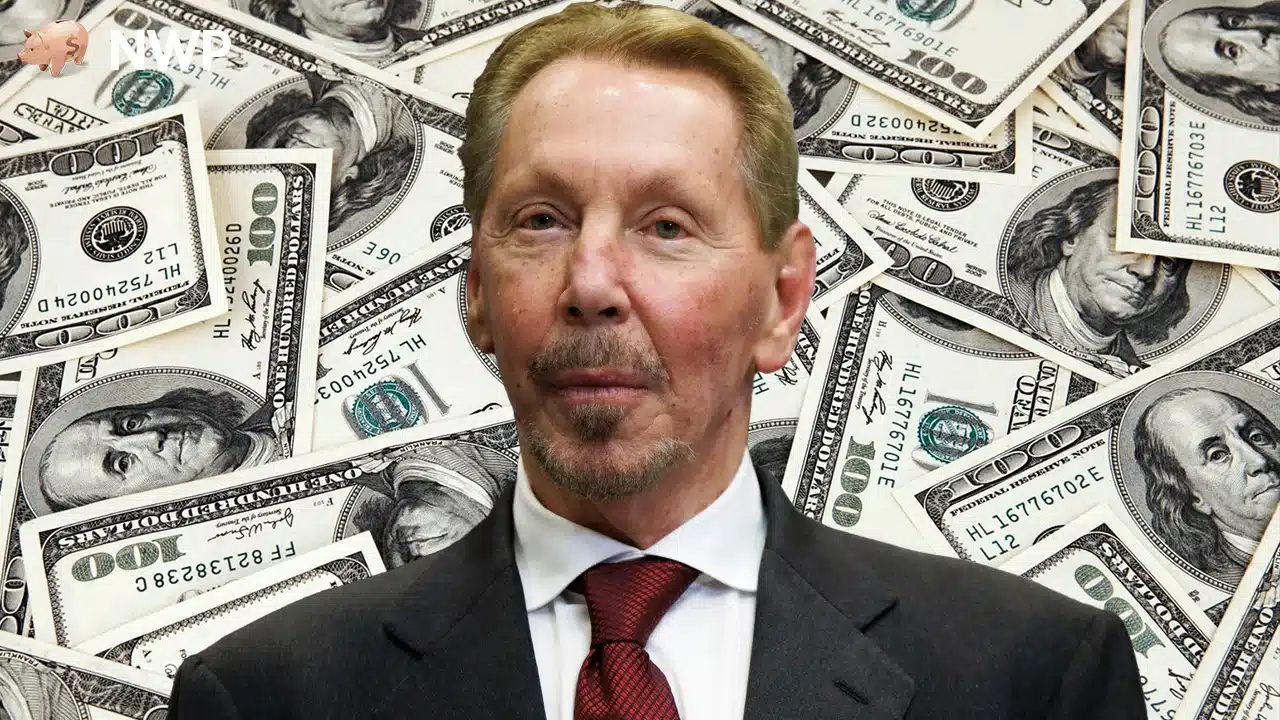
Larry Ellison is one of technology’s most polarising figures. Born into modest circumstances in New York in 1944 and raised by an adoptive aunt and uncle in Chicago, he became fascinated with mathematics and science and dropped out of two universities before stumbling into the nascent computer industry[source]. In 1977 he co‑founded Software Development Laboratories (later renamed Oracle) with Bob Miner and Ed Oates, using a $50,000 contract from the CIA to develop a relational database – code‑named Project Oracle – as seed capital[source]. Ellison pushed the fledgling company with aggressive sales tactics, promising features that did not yet exist and underbidding rivals, while cultivating a persona equal parts playboy and technologist. His competitiveness led to corporate espionage scandals – such as hiring investigators to sift through Microsoft allies’ trash during the U.S. antitrust trial[source] – but the risk appetite delivered outsized rewards. Oracle’s 1986 IPO made his 39 % stake worth about $93 million[source], and the company’s dominance in database software, combined with dozens of acquisitions, stock buybacks and a lucrative Tesla investment, catapulted his net worth from roughly $100 million in the mid‑1980s to more than $250 billion in 2025[source][source]. Today Ellison holds about 40 % of Oracle, controls a real estate empire including 98 % of the Hawaiian island of Lanaʻi, and funds medical research and sailing teams. The following investigation dissects his journey: the origins and growth of Oracle, strategic acquisitions, big wins and missteps, the evolution of his fortune, and his enduring impact on technology and beyond.
Origins and early wealth building
Adoption, early curiosity and first jobs
Lawrence Joseph Ellison was born in the Bronx on August 17 1944 to an unwed mother, then sent to live with his aunt and uncle in Chicago when he was nine months old after contracting pneumonia[source]. His adoptive father had lost his real‑estate business during the Great Depression and worked as an auditor; the young Ellison excelled at mathematics and science and was named science student of the year at the University of Illinois but dropped out when his adoptive mother died[source]. After brief stints at the University of Chicago and various odd jobs, he learned computer programming in the 1960s and joined a series of technology firms including Amdahl, where he helped build IBM‑compatible mainframe systems[source].
Founding Oracle and the CIA contract
In 1977 Ellison, along with Bob Miner and Ed Oates, scraped together $2,000 – Ellison contributed $1,200 – to launch a start‑up called Software Development Laboratories[source]. Their big break came when they secured a $50,000 contract from the U.S. Central Intelligence Agency to build a relational database for its “Project Oracle.” The founders cannily adopted the project name for their product, later renaming the company Oracle Corporation[source]. To project maturity, they called their first commercial release “Oracle Version 2” despite it being their initial version[source]. They produced the world’s first commercial relational database using SQL in 1979, and early clients included the CIA and IBM[source].
Aggressive salesmanship and early risks
Ellison’s appetite for risk quickly became part of Oracle’s identity. He instructed sales teams to promise future functionality and undercut competitors by offering steep discounts[source]. This drive sometimes backfired: by booking revenue when contracts were signed rather than when software was delivered, Oracle overstated sales and posted its first quarterly loss in 1990, forcing a restatement that cut 1990 revenue by more than $50 million and wiped out over $2.7 billion in market value[source]. The near‑collapse prompted layoffs of 10 % of staff and stricter financial controls, but the company returned to profitability in 1992[source]. Such booms and busts became a recurring motif of Ellison’s career.
Competitive zeal and espionage
Ellison viewed business as a gladiatorial sport. During the late 1990s and early 2000s he instructed subordinates to gather information on rivals, culminating in the “Dumpstergate” scandal of 2000. Oracle hired Investigative Group International to rummage through the trash of pro‑Microsoft groups during the Justice Department’s antitrust case against Microsoft; investigators paid janitors for access to garbage and uncovered evidence that Microsoft funded purportedly independent organizations[source]. When reporters exposed the operation, Ellison unapologetically defended it as “a civic duty” and paraphrased Genghis Khan: “It’s not enough that we win; all others must lose”[source]. The episode cemented his image as Silicon Valley’s “bad boy billionaire.”
Oracle as the engine of wealth
IPO and stock performance
Oracle went public on 12 March 1986, selling 2.1 million shares at $15 each. The IPO valued Oracle at around $270 million, and Ellison’s 39 % stake became worth roughly $93 million on the first day[source]. The stock languished for much of the late 1980s but surged during the 1990s as Oracle established itself as the dominant provider of relational database software. Despite the 1990 accounting crisis, Oracle posted annual revenue growth of 30 %–40 % and became the largest database vendor by the mid‑1990s.
Revenue milestones and Y2K boom
During the late 1980s and 1990s Oracle benefited from the widespread adoption of relational databases and the buildup to the Y2K date‑change problem. Companies modernised their systems using Oracle’s software, and by 1999 the company reported annual revenue approaching $9 billion. The dot‑com boom pushed Oracle’s share price to record highs, making Ellison briefly the richest person in the world in 2000 with a fortune of $58 billion, only for it to fall to about $18.7 billion after the tech bubble burst[source].
Transition to the cloud and AI
In the 2010s Ellison and his lieutenants Safra Catz and Mark Hurd pivoted Oracle toward cloud computing. Oracle initially lagged Amazon Web Services and Microsoft Azure, but the company’s focus on database services for artificial‑intelligence training and its ability to run on Nvidia’s high‑performance chips allowed it to reaccelerate. As of mid‑2025, Oracle shares had rallied sharply, lifting Ellison’s net worth above $240 billion[source].
Acquisition strategy: buying growth
PeopleSoft (2004): After an 18‑month hostile takeover battle, Oracle acquired enterprise software rival PeopleSoft for $10.3 billion in cash (at $26.50 per share), representing a 75 % premium over PeopleSoft’s pre‑bid share price[source]. The deal expanded Oracle’s applications business and added 12,750 customers but led to thousands of layoffs and customer unrest[source].
Sun Microsystems (2010): Oracle purchased Sun Microsystems, the creator of the Java programming language and Solaris operating system, for $7.4 billion ($9.50 per share). The acquisition, completed in January 2010 after regulatory delays, brought Java, MySQL and high‑end server hardware into Oracle’s portfolio[source][source].
NetSuite (2016): To strengthen its cloud‑based ERP offering, Oracle agreed to acquire NetSuite for $9.3 billion in cash at $109 per share. NetSuite, co‑founded by Ellison and majority‑owned by his family, served more than 30,000 businesses and complemented Oracle’s enterprise‑focused cloud services[source].
Cerner (2022): Oracle closed its largest deal to date when it bought health‑technology company Cerner for $28.3 billion. Oracle positioned Cerner as an “anchor asset” to expand into healthcare and pledged to modernise Cerner’s electronic medical records using Oracle’s cloud infrastructure[source].
Buybacks and dividends
Beyond acquisitions, Oracle has used financial engineering to boost earnings per share and Ellison’s wealth. The company cut its share count roughly in half over the past decade through aggressive stock repurchases[source]. Share buybacks slowed to just under $2 billion in the first half of fiscal 2023 as Oracle digested the Cerner deal, down from nearly $16 billion a year earlier[source]. Meanwhile, Oracle increased its dividend by 33 % in 2023; Ellison personally pocketed more than $1 billion in dividends in a single year thanks to his roughly 40 % stake[source].
Net worth evolution
Ellison’s fortune has gyrated in line with Oracle’s share price and his other investments. The table below tracks his estimated wealth by decade, drawing on Forbes, Bloomberg and historical data.
Net worth timeline by decade
| Decade | Key events & inflection points | Estimated net worth* |
| 1980s | Oracle founded with $2,000; secures $50k CIA contract; first commercial SQL database; IPO in 1986 values Ellison’s stake at $93 million[source] | ≈ $0.1 billion (post‑IPO) |
| 1990s | Oracle overcomes 1990 accounting crisis; Y2K boom drives rapid growth; Ellison invests in yachts and private jets; by late 1999 Oracle stock surge makes him briefly the world’s richest | $5–50 billion (peaks at ~$58 billion in 2000, then collapses)[source] |
| 2000s | Dot‑com bust slashes wealth to around $18.7 billion by 2004[source]; Oracle acquires PeopleSoft; Ellison buys luxury properties and a yacht; fortune recovers as databases remain essential | $15–25 billion |
| 2010s | Purchases Sun Microsystems (2010) and NetSuite (2016); invests $1 billion to buy 3 million Tesla shares, later worth over $15 billion after split[source]; steps down as CEO in 2014 but remains CTO; buys 98 % of Lanaʻi for $300 million and invests ~$500 million in its development[source] | $40–80 billion |
| 2020s | Oracle acquires Cerner ($28.3 billion); stock rallies on cloud and AI demand; Ellison’s net worth more than triples from $80 billion in late 2022 to $256 billion by July 2025[source]; he becomes the world’s second‑richest person[source] | $80–270 billion |
*Values are approximate and based on contemporaneous reports. They include Oracle stock, other tech stakes (notably Tesla), real estate and private holdings.
Composition of Ellison’s wealth
- Oracle equity: Ellison currently owns about 40 % of Oracle’s stock[source]. This has long been the core of his fortune. He has sold roughly $12 billion worth of shares and collected billions in dividends since 2003[source].
- Other tech stakes: In 2018 he invested $1 billion in Tesla, buying 3 million shares; after a 5‑to‑1 split in 2020 this stake became 15 million shares (about 1.5 % of Tesla). Its value ballooned to roughly $15 billion by 2021[source][source].
- Real estate empire: Ellison owns one of the world’s priciest property portfolios. In 2012 he purchased 98 % of Lanaʻi, Hawaii’s sixth largest island, for $300 million and has invested $500 million in sustainability projects and resorts there[source]. He owns a $200 million Japanese‑style estate in Woodside[source], the Beechwood mansion in Newport (bought for $10.5 million and renovated for $100 million)[source], Carbon Beach estates in Malibu worth roughly $180 million[source], and numerous other properties.
- Private ventures & philanthropy: Ellison is an avid sailor; he spent hundreds of millions on racing yachts and bankrolled BMW Oracle Racing to win the America’s Cup in 2010. In May 2016 he donated $200 million to the University of Southern California to create the Lawrence J. Ellison Institute for Transformative Medicine, an interdisciplinary cancer research center[source].
Financial bets: wins vs losses
Ellison’s career is marked by bold bets, some wildly successful and others costly.
| Category | Wins | Losses / risks |
| Database dominance | Developing the first commercial relational database using SQL secured long‑term licensing revenue and locked in customers like IBM and the CIA[source]. Oracle’s dominance allowed recurring maintenance fees and high switching costs, generating billions over decades. | Lagging in cloud computing allowed rivals like AWS and Microsoft to capture much of the market. Oracle has since scrambled to reposition its database services for AI workloads. |
| Acquisitions | PeopleSoft added a large applications business and eliminated a competitor[source]. Sun Microsystems delivered Java and Solaris, giving Oracle control over core technologies[source]. NetSuite brought a fast‑growing cloud ERP platform[source]. Cerner positions Oracle in healthcare[source]. | Integration challenges and price tags posed risks. PeopleSoft led to layoffs and customer defections[source]. Analysts questioned the return on the $7.4 billion Sun purchase as hardware revenues shrank and MySQL remained open source. |
| Financial engineering | Aggressive share buybacks halved the share count over a decade, boosting earnings per share and Ellison’s stake[source]. Higher dividends provided him billions in cash[source]. | Overreliance on buybacks can mask underlying growth challenges, and heavy borrowing to fund repurchases increases leverage. Buybacks slowed dramatically after the costly Cerner acquisition[source]. |
| Tesla investment | A $1 billion investment in 2018 ballooned to a stake worth over $15 billion after Tesla’s stock split[source]. Ellison earned a board seat and gained insight into another industry. | Tesla is volatile and capital‑intensive; his board position ended in 2022[source]. A large single‑stock exposure adds risk. |
| Real estate | Buying 98 % of Lanaʻi has more than doubled in value, and his numerous mansions appreciate while enabling tax benefits. The island provides a playground for sustainability projects and prestige[source]. | Maintaining dozens of properties and developing Lanaʻi requires hundreds of millions in upkeep. Many purchases, such as the Cal Neva Lodge ($35.8 million)[source], remain undeveloped or under‑utilised. |
| Playboy lifestyle & hobbies | Winning the America’s Cup and funding sailing teams burnishes his legacy and marketing (Oracle sponsorship) while satisfying personal passions. | Mega‑yachts, vintage aircraft and lavish parties cost hundreds of millions with no direct financial return. They reinforce his reputation for excess. |
Personality and strategy
Management style: empire builder and loyal inner circle
Ellison cultivated a corporate culture that prized competitiveness and loyalty. He pushed out executives who challenged his authority, such as long‑time COO Ray Lane, and centralised decision‑making[source]. Employees described an environment where winning mattered above all else; Ellison revelled in paraphrasing warlords and competing relentlessly[source]. He rewarded those in his inner circle (Safra Catz became CEO in 2014, while he remained CTO) and expected unwavering allegiance.
Culture of competition and lawsuits
Oracle routinely used lawsuits as a competitive weapon. It sued competitors for copyright infringement, blocked rivals’ mergers, and faced antitrust scrutiny for its own deals. The Dumpstergate scandal revealed a willingness to cross ethical lines; Ellison defended dumpster‑diving as good citizenship[source]. Critics argue that such tactics fostered a cut‑throat culture and contributed to high employee turnover[source].
Playboy lifestyle vs discipline
Beyond business, Ellison cultivated a lavish lifestyle. He collected racing yachts, bought numerous mansions, hosted Malibu parties and competed in tennis tournaments. Yet he also displayed disciplined financial instincts: his personal investment in Tesla produced outsized returns, and he has systematically used buybacks and dividends to monetise Oracle holdings[source]. This duality – hedonistic playboy and shrewd investor – defines his persona.
Silicon Valley’s bad boy billionaire
Ellison’s flamboyance and willingness to skirt norms have both attracted admirers and generated controversy. He has been compared to characters in Greek tragedy: brilliant, arrogant and occasionally reckless. The 1990 accounting fiasco and the Microsoft trash‑spying scandal illustrate how his risk‑taking sometimes backfires. Yet his vision and execution built a software empire and enormous personal fortune.
Outlook and legacy
Current risks and the AI/cloud race
As of 2025 Oracle remains the world’s second‑largest software company, but it faces fierce competition from Amazon, Microsoft and Google in cloud infrastructure and AI services. Ellison has argued that training a cutting‑edge AI model could cost more than $100 billion, providing an opportunity for Oracle’s high‑performance database and cloud products[source]. However, Oracle must continue investing heavily in data centres and chips to compete, and its late start in cloud computing means capturing market share is not guaranteed.
Succession planning
Ellison stepped down as CEO in 2014 and elevated Safra Catz (co‑CEO until 2019) and the late Mark Hurd. He remains executive chairman and chief technology officer. His children, David and Megan Ellison, run film production companies (Skydance and Annapurna), suggesting they may not take control of Oracle. The company has not announced a clear succession plan, raising questions about continuity after Ellison, who will be 81 in 2025.
Legacy projects: Lanaʻi and philanthropy
Owning 98 % of Lanaʻi affords Ellison a real‑life canvas to experiment with sustainability. He has upgraded infrastructure, built hydroponic farms and two luxury resorts, and launched renewable‑energy projects[source]. Observers debate whether the island is a vanity project or a sincere attempt to create a green utopia. In philanthropy, the Lawrence J. Ellison Institute for Transformative Medicine at USC reflects his interest in medical research; the $200 million gift funds interdisciplinary cancer research[source][source]. Ellison also signed The Giving Pledge in 2010, committing most of his wealth to charity, though his giving has lagged peers like Bill Gates.
Place in tech history
Ellison belongs to the pantheon of post‑war tech titans. Alongside Bill Gates and Steve Jobs, he transformed business computing and created a software category that underpins modern commerce. While Gates focused on desktop software and Jobs on user experience, Ellison built the infrastructure that stores and queries data. His empire’s longevity and his ability to reinvent Oracle through successive waves of technology set him apart. His personality – brash, competitive, risk‑embracing – made him a lightning rod, yet those very traits powered his ascent from a modest upbringing to controlling one of the largest fortunes on Earth.
Conclusion: how Ellison built his fortune
Larry Ellison’s journey from an adopted kid in Chicago to the world’s second‑richest person is a testament to audacity, resilience and timing. He recognised the potential of relational databases early, persuaded the CIA and IBM to adopt Oracle’s software, and built a company that became indispensable to enterprises. Along the way he gambled: over‑promising functionality, under‑bidding contracts, spying on rivals and placing billion‑dollar bets on acquisitions and stocks. Some gambles misfired – the 1990 accounting scandal nearly sank Oracle, and the Sun acquisition’s payoff remains debated – but most paid off handsomely. By combining steady wealth creation from Oracle’s cash cow with strategic acquisitions, aggressive buybacks and side investments like Tesla, he turned a few thousand dollars into a fortune exceeding a quarter‑trillion. His persona – part corporate warrior, part playboy – both reflects and reinforces the risk appetite that shaped his fortune. As Oracle navigates the AI era and Ellison contemplates succession, his legacy is already secure: a brilliant, controversial founder who amassed enormous wealth by turning data into gold.


Leave a Comment