

Origins and Business Background
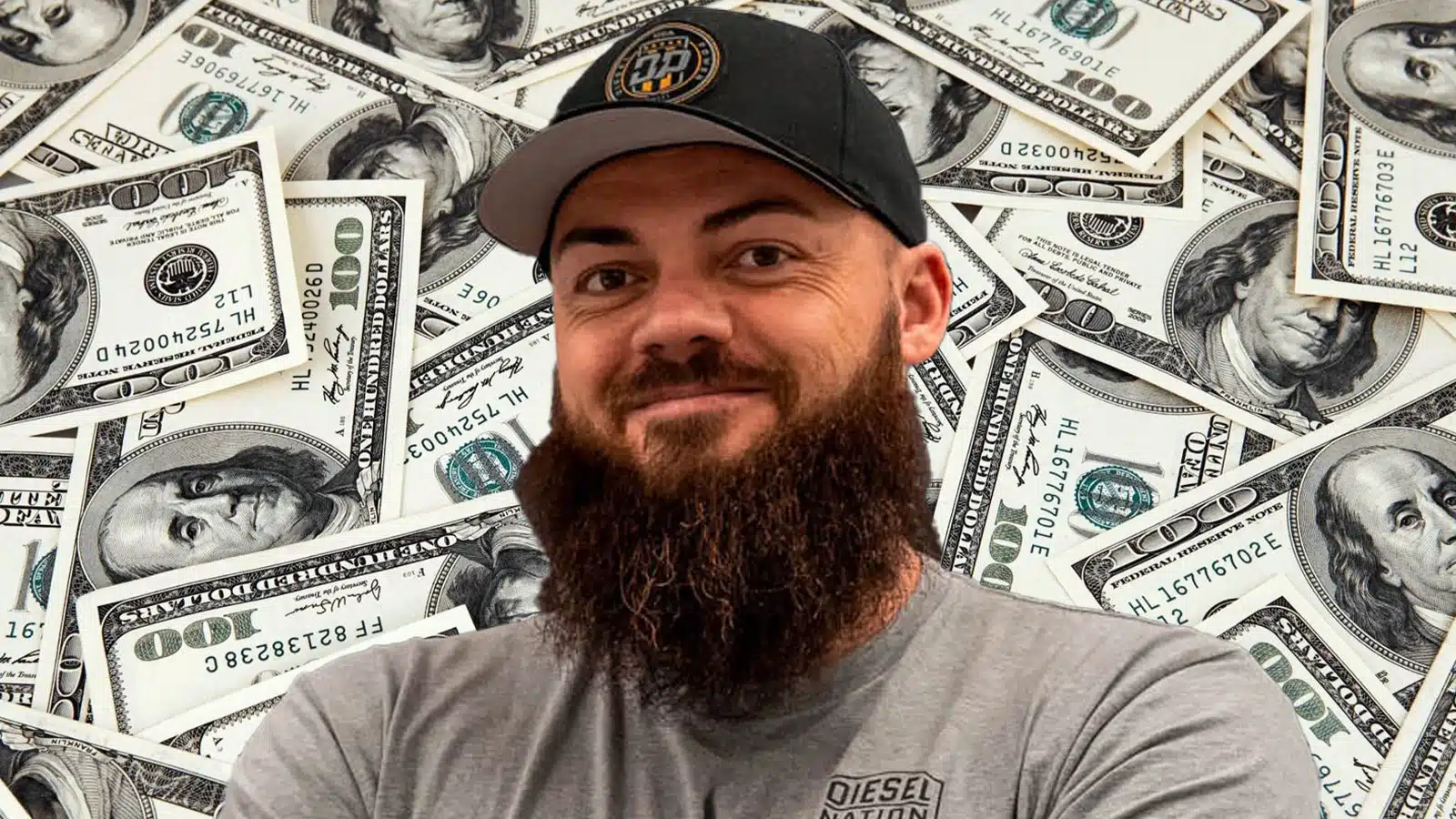
Dave “Heavy D” Sparks grew up in Utah and turned an obsession with diesel trucks and heavy equipment into a multi‑platform business empire. Born in 1985, Sparks spent his early years working with construction machinery and studying diesel mechanics. He partnered with his high‑school friend Dave “Diesel Dave” Kiley and later with entrepreneurs Josh Stuart and Keaton “Diesel Sellerz” Hoskins, eventually co‑founding several businesses: B&W Auto/Sparks Motors (a shop specialising in custom diesel builds), Diesel Power Gear, and DieselSellerz. The quartet’s antics modifying heavy trucks attracted the attention of the Discovery Channel, and in 2016 they debuted the reality series “Diesel Brothers,” which followed them building outrageous diesel vehicles, rescuing off‑roaders and running online truck giveaways. As the show’s frontman, Sparks cultivated the persona of a jovial gearhead who dared regulators, branded himself HeavyDSparks on YouTube, and built a loyal fan base of more than four million subscribers.
Sparks’ companies are interconnected. Diesel Power Gear sells branded apparel and gear; court documents reveal that its “principal revenue stream” is selling merch and hosting monthly sweepstakes where every $5 spent earns entries into a drawing for a custom‑built truck[source]. B&W Auto/Sparks Motors operates the custom shop in Woods Cross, Utah and employs roughly 10 people with estimated revenue of $1.9 million[source]. DieselSellerz runs an online classified listing service for diesel vehicles. Sparks also formed HeavyDSparks LLC for his YouTube operations and separate ventures, bought and later sold a 3,000‑acre property on Fremont Island in the Great Salt Lake (assessed at about $900 k[source]) and built a large rustic house on a 2.75‑acre lot in 2020[source]. In 2023 he launched a salvage and recovery operation and a training “Heavy Academy” that teaches recovery techniques.
This profile is complicated by a series of legal controversies: the Diesel Brothers were sued by Utah Physicians for a Healthy Environment for installing “defeat devices” that disable emissions controls. The Tenth Circuit Court of Appeals in 2021 affirmed that Sparks and his companies violated the Clean Air Act and upheld over $760,000 in civil penalties[source]. Separate civil litigation from the Italian fashion house Diesel S.p.A. resulted in a US$11.8 million judgment against Diesel Power Gear for trademark infringement, a ruling based on the company’s gross sales of $65.1 million and net sales of $59.1 million[source]. Sparks has also been drawn into the electric‑vehicle startup Embr Motors (styled “EMBR”), which purchased the intellectual property for Nikola Motor’s ill‑fated Badger pickup program. According to TechCrunch, Embr—co‑created by Sparks—paid “tens of millions” and gave Nikola a 30 % stake while Sparks received some Nikola stock; the deal is being contested in a lawsuit accusing Embr and Sparks of breaching agreements[source][source]. The compounding of mainstream success, merchandise marketing and high‑profile lawsuits makes HeavyDSparks an instructive case study in the economics of a modern YouTube empire.
Estimating Net Worth: Methods and Assumptions
HeavyDSparks’ net worth cannot be pinned down precisely because much of his wealth is tied to private companies and illiquid assets. Public estimates on celebrity websites range between $2 million and $5 million[source], but those figures seldom explain their methodology. Here we develop two complementary valuation approaches—a conservative asset‑based calculation and an income‑capitalisation model—to derive a reasonable range.
Asset‑Based Valuation
- Business Equity:
- Diesel Power Gear (DPG) – Court filings show DPG’s net sales from apparel and sweepstakes were $59.1 million[source]. Profits are not disclosed; however, merchandising businesses often operate on net margins around 15 % to 20 %. Assuming a 15 % margin yields approximately $8.9 million in annual operating profit. If Sparks owns one‑third (with partners Kiley and Stuart), his share of the enterprise might generate $3 million annually. If we value DPG at four times earnings—a standard multiple for lifestyle apparel companies—Sparks’ stake would be roughly $12 million. Yet this figure must be adjusted for the $11.8 million trademark judgment. If the company must pay this judgment over several years, the liability could consume most profits, effectively halving the equity value. A conservative estimate values Sparks’ stake at $5–7 million net of legal liabilities.
- B&W Auto/Sparks Motors – Datanyze’s industry profile lists about $1.9 million in annual revenue and 10 employees[source]. Custom auto shops often operate on slim margins (10 %). If Sparks owns 50 %, his stake could be worth $100 k to $200 k.
- DieselSellerz – The classified listing site’s finances are opaque; we assume a modest valuation of $1 million for the platform. If Sparks owns one‑quarter, his share is $250 k.
- HeavyDSparks YouTube Channel & Social Media – With over 4.4 million subscribers and 1.1 billion total views, the channel has brand value that could be sold. Social‑media acquisitions often value channels at two to three times annual revenue; using revenue estimates below, the channel might be worth $5–15 million.
- Real Estate & Tangible Assets:
- Home in Utah – Sparks moved into a custom house on 2.75 acres with eight bedrooms and 3.5 bathrooms[source]. Luxury homes in suburban Salt Lake City of similar size commonly list for $1–3 million. For our base case we assign $2 million.
- Fremont Island investment – Sparks led a group to buy the 3,000‑acre Fremont Island property assessed at $900 k[source] and sold it in 2020 to a conservation buyer[source]. With no sale price disclosed, we assume the group sold near the assessed value; Sparks’ share might have been $100–200 k.
- Vehicles and Equipment – As the star of a show featuring dozens of custom trucks, rescue rigs and heavy machinery, Sparks likely owns or controls a fleet valued in the millions. However, many vehicles are shop inventory or sweepstakes prizes, not personal assets. We estimate his personal collection at $1 million after depreciation.
- Cash & Investments: Sparks has invested in Embr Motors, though the venture is embroiled in litigation. Without public financials, we omit Embr from the asset base but acknowledge it could add (or subtract) several million dollars. Cash from YouTube and apparel profits is hard to estimate; we assume he maintains $1 million in liquid assets.
Summing these assets yields a base-case asset valuation of roughly $10–15 million. After subtracting liabilities—including a personal portion of the $11.8 million trademark judgment and the $760 k Clean Air Act penalty—the conservative net worth could be $6–8 million. A more optimistic scenario (assuming Embr and the YouTube channel are valued at the high end) could lift his net worth toward $15 million.
Income‑Capitalisation Method
This method estimates net worth by capitalising annual profits at a chosen multiple (e.g., 3–5× for small businesses). HeavyDSparks’ annual earnings include YouTube ad revenue, merch and sweepstakes income, brand deals, and other ventures, minus operating costs and taxes. We break down revenues and expenses below and derive annual net profit. Applying a conservative multiple of 3 yields a low valuation; applying 5 yields an optimistic scenario. The resulting valuation range aligns broadly with the asset‑based estimate.
Revenue Streams
YouTube Ad Revenue
As of August 2025, HeavyDSparks’ YouTube channel had 4.4 million subscribers and over 1.1 billion views[source]. The channel posts long‑form automotive adventures—recovering stranded vehicles, building custom trucks, racing and performing stunts. Monetisation occurs through YouTube’s Partner Program, which pays creators a share of advertising revenue (often around 55 %). RPM (revenue per thousand views after YouTube’s cut) varies by niche; for automotive content targeted at U.S. viewers, industry analysts cite $3–$6 per thousand monetised views. If the channel generates 80–120 million views annually, ad revenue could range from $240,000 to $720,000. The analytics site Speakrj estimates annual YouTube revenue between $254,000 and $5.7 million[source], but the upper bound seems inflated relative to typical RPMs. We adopt a conservative low case ($300 k), a base case ($500 k) and an aggressive case ($800 k) for annual ad revenue.
Brand Deals and Sponsorships
Sparks leverages his influence to secure sponsorships from companies eager to reach automotive enthusiasts. In 2018 the heavy‑equipment manufacturer New Holland Construction partnered with him for a year‑long campaign; the brand’s marketing manager called him a natural partner because he blends “innovation, comfort and power,” and Sparks praised their equipment[source]. In 2020 the technical school WyoTech signed Heavy D and Diesel Dave to promote skilled trades and inspire the next generation[source]. Additional brand deals involve engine parts, power tools and off‑road tires, though financial terms are rarely disclosed. Automotive YouTubers with millions of subscribers typically charge $20,000–$50,000 per integrated sponsorship or “branded build” video. Assuming Sparks hosts 10–15 sponsored videos per year, sponsorship income likely ranges from $200 k (low case) to $750 k (high case), with a base case around $400 k.
Merchandise, Apparel and Sweepstakes
The heart of Sparks’ business is Diesel Power Gear (DPG), which sells T‑shirts, hats, hoodies and custom build kits. For every $5 spent, customers receive entries into giveaways for trucks and cash[source]. This model has been extremely lucrative: court evidence in the Diesel S.p.A. trademark case shows that DPG had $65.1 million in gross sales and $59.1 million in net sales during the infringement period[source]. Assuming similar sales volumes in subsequent years, annual revenue may be $50–60 million. The cost of goods sold—including manufacturing, prizes, marketing and administrative expenses—likely consumes 80–85 % of revenue. A 15 % profit margin yields $7.5–9 million in profit, of which Sparks’ share could be $2.5–3 million. This line of business dwarfs his YouTube earnings but faces regulatory and legal risks discussed later.
Custom Builds and Shop Work (Sparks Motors)
Sparks’ shop builds one‑off trucks, restores vintage diesels and offers towing and recovery services. Datanyze’s profile for Sparks Motors lists revenue of $1.9 million and roughly 10 employees[source]. Profit margins in custom vehicle shops are modest (about 10 %), suggesting $190 k in profit. Additional revenue stems from salvage operations like “Heavy D Rescue,” where the crew recovers stranded vehicles and charges owners or insurance companies. These jobs can yield thousands per recovery but are sporadic. Altogether we estimate annual income from shop and recovery work at $200 k (low), $400 k (base) and $600 k (high).
Television, Streaming and Licensing
The Discovery Channel series “Diesel Brothers” ran for eight seasons between 2016 and 2021. Reality‑show salaries vary widely; early seasons may pay participants a few thousand dollars per episode, rising to $20,000–50,000 for established stars. Assuming eight seasons at 8–10 episodes each and an average salary of $25,000 per episode, Sparks could have earned $2–3 million from the show. However, network contracts often include exclusivity and reduce on‑platform monetisation, so his involvement may have curtailed YouTube output during filming. Additionally, residual licensing rights for streaming reruns are modest. We estimate current annual revenue from TV and licensing at $50 k.
Affiliate Links and Online Storefronts
Sparks occasionally promotes products through affiliate links on social media. Automotive affiliates typically pay 5–10 % commissions. Given his large audience, he could generate $50 k–$100 k annually. We assign $75 k as a base case.
Other Ventures and Investments
Sparks’ ventures extend beyond trucks. In 2018 he led a group to purchase Fremont Island, a 3,000‑acre property in the Great Salt Lake assessed at $900 k[source]. The group sold it in 2020 to a conservation buyer after their master‑planned development faced regulatory hurdles[source]; the sale price was undisclosed, so any profit remains speculative. Sparks later used the property in YouTube content, possibly recouping value via ad revenue.
In 2022–2023 he launched or invested in Embr Motors, a venture intended to resurrect Nikola’s scrapped Badger electric pickup. TechCrunch reported that Embr paid Nikola “tens of millions” for the intellectual property and gave Nikola a 30 % stake[source]. Nikola is now suing Embr and Sparks for allegedly allowing former CEO Trevor Milton to influence the company, citing contract breaches, securities law violations and trademark issues[source]. The financial outcomes of this litigation are unclear; the venture may prove profitable if Embr can commercialise the electric truck but could also become a large liability.
Cost Structure and Operating Expenses
Producing high‑quality automotive content and running a merch‑sweepstakes empire are expensive. Key cost categories include production, facilities, parts and builds, logistics, merchandise fulfilment, marketing and legal fees.
Production Costs
Professional video production involves a crew of camera operators, editors, drone pilots, sound technicians and logistics managers. According to a 2024 guide on video production costs, producing a 3–5‑minute brand video costs between $7,000 and $50,000+ and the price per finished minute of corporate video ranges from $1,500 to $7,000[source]. HeavyDSparks’ videos often run 20–30 minutes, incorporate multiple camera angles, drones and cinematic storytelling, and require travel to remote locations. Assuming a cost of $3,000 per minute, a 25‑minute episode could cost $75,000. If the channel releases 12 major episodes per year plus shorter content, annual production expenses could be $800 k–$1.5 million (including crew salaries). Smaller projects may reduce the average; we adopt $700 k (low case), $1 million (base), and $1.3 million (high).
Shop, Facilities and Equipment
Operating a custom shop requires a large warehouse, lifts, fabrication tools and machine shops. Rent or mortgage for industrial space in the Salt Lake area can exceed $10,000 per month. Utilities, insurance and permits might add another $5,000 monthly. Annual facility overhead therefore ranges from $150 k to $200 k. Major builds require tens of thousands of dollars in parts—engines, axles, suspensions, paint and materials. If each giveaway truck costs $80,000 to build (including labour) and DPG awards six trucks a year, build costs alone are $480 k.
Logistics, Travel and Transportation
Recovering vehicles for content requires diesel recovery trucks, trailers and heavy‑equipment operators. Fuel and transport across the mountainous West can easily exceed $100,000 per year. Travel for film crews and accommodations add to this figure. We estimate total logistics costs of $200 k–$300 k annually.
Merchandise Fulfilment and Marketing
Producing apparel requires contracting with garment manufacturers, printing logos and storing inventory. The cost of goods sold likely accounts for 60–70 % of merchandise revenue; shipping, warehousing and e‑commerce management add further expense. If DPG’s revenue is $60 million, cost of goods and fulfilment could be $45 million. Marketing, including paid social media ads and large giveaways, might add $2–3 million. Because this cost is already reflected in the margin assumptions above, we do not double count it here but note its importance.
Legal and Compliance Costs
After the 2017 Clean Air Act lawsuit, the Diesel Brothers were placed under a permanent injunction against modifying emissions controls. The appeals court decision upholding $760,000 in penalties[source] likely entailed significant legal fees. The group also faces the Diesel S.p.A. trademark judgment of $11.8 million[source] and ongoing suits related to Embr Motors[source]. Legal expenses and settlements could run into millions annually and must be considered a major ongoing cost and risk.
Summary of Operating Costs
Combining production ($0.7–1.3 M), facility overhead ($0.15–0.2 M), build costs ($0.48 M), logistics ($0.2–0.3 M), and legal/compliance expenses ($0.2 M estimated for typical years excluding extraordinary judgments), HeavyDSparks’ total annual operating costs likely fall between $1.7 million (conservative) and $2.5 million (aggressive). The merch business’s cost of goods (already deducted when computing profit) is not included here to avoid duplication.
Debts, Liabilities and Legal Issues
The Clean Air Act enforcement case and trademark litigation are the most significant financial liabilities facing HeavyDSparks.
- Clean Air Act Penalty – The Tenth Circuit Court of Appeals affirmed that Diesel Power Gear, Sparks Motors, David Sparks and Joshua Stuart violated federal and state emissions laws by installing defeat devices and assessed over $760,000 in civil penalties[source]. The court remanded aspects of the penalty calculation, but the liability remains substantial. The defendants were also permanently enjoined from performing future modifications, limiting revenue from tuning services.
- Trademark Judgment – In 2023 a federal judge awarded Italian fashion brand Diesel S.p.A. $11.8 million after finding that Diesel Power Gear willfully infringed Diesel’s trademarks[source]. The court considered DPG’s gross sales ($65.1 million) and net sales ($59.1 million) when determining damages[source]. If the judgment stands, DPG (and by extension its owners) may need to pay the damages over time. This liability could wipe out profits for several years and threatens the company’s viability.
- Embr Motors Litigation – Nikola Motor sued Embr Motors, Dave Sparks and co‑founders for allegedly breaching the agreement that sold the Badger pickup IP. The suit alleges that Sparks and his partners allowed Nikola’s indicted founder Trevor Milton to influence the new venture, violating contract terms and securities laws[source]. While the outcome is unknown, the litigation could impose further costs and highlight reputational risks.
- Other Lawsuits – HeavyDSparks has faced additional suits, such as claims from consumers unhappy with giveaway rules or modifications. However, most are minor relative to the headline cases.
- Loans and Capital Structure – Some speculation exists that the Diesel Brothers took out Paycheck Protection Program loans during the COVID‑19 pandemic, but accessible records are limited due to website restrictions encountered during research. Without reliable data, we cannot quantify these debts. Nevertheless, financing heavy equipment, property and builds likely requires bank loans or lines of credit. We estimate outstanding loans at $1–2 million, but this is speculative.
Business Model Sustainability
The sustainability of HeavyDSparks’ business depends on balancing high‑risk, high‑reward ventures and compliance with evolving regulations. The merch‑sweepstakes model drives revenue but invites legal scrutiny. Sweepstakes require compliance with lottery and gambling laws; regulators could clamp down on ambiguous promotions. The Clean Air Act injunction restricts profitable diesel modifications. The trademark judgment threatens to drain cash reserves and may force rebranding. Meanwhile, YouTube’s algorithm changes and advertiser preferences can significantly impact ad revenue.
From a diversification perspective, Sparks’ empire is reasonably balanced. While YouTube income is volatile, it functions as top‑of‑funnel marketing that fuels merch sales. The custom shop and recovery business provide content and a modest financial cushion. Brand deals deliver stable income but depend on his public image. Real estate and new ventures like Embr provide long‑term upside. To sustain growth, Sparks must adapt to legal restrictions, avoid further infringement and pivot towards cleaner technologies—perhaps leveraging Embr to enter the electric‑vehicle market. Reinvesting profits into professional operations, safety training and compliance will be critical.
Risks and Challenges
- Regulatory Risk – The core content of modifying diesel engines clashes with emissions regulations. The Clean Air Act injunction prohibits defeat devices; future violations could yield multi‑million‑dollar penalties or criminal charges. Changing environmental policies may further restrict diesel modifications.
- Legal Liabilities – The trademark judgment and ongoing lawsuits represent huge financial overhangs. Insurance may cover some costs, but repeated litigation erodes capital and distracts management.
- Sweepstakes Scrutiny – While legal in many states, prize‑based sales could be characterised as gambling if not carefully structured. Regulators have investigated similar promotions; a crackdown could decimate Diesel Power Gear’s revenue.
- Content Platform Volatility – YouTube can demonetise channels or change algorithms without notice. Automotive content featuring crashes or firearms may be limited. A platform suspension would cut off ad revenue and marketing reach.
- High Operating Costs – Maintaining a fleet of builds, a professional film crew and a warehouse is expensive. If views decline or legal costs spike, fixed costs could outstrip revenue.
- Public Image – Sparks’ brash persona appeals to fans but risks alienating sponsors who prefer clean branding. Misinformation or scandals can quickly damage reputation.
Conclusion and Outlook
Dave “Heavy D” Sparks built a multi‑faceted empire that fuses viral content, hands‑on engineering and aggressive merchandising. By capturing the imagination of millions of truck enthusiasts, he transformed a small Utah shop into a brand with global reach, grossing tens of millions through apparel and sweepstakes[source]. However, that success rests on precarious foundations. Legal challenges have already cost the business more than $760,000 in fines[source] and threaten an $11.8 million payout[source]. The star of an outlaw diesel culture is now under the watchful eye of regulators and trademark holders.
Financially, a conservative assessment places Sparks’ net worth around $6–8 million, while an optimistic view (assuming the merch business overcomes legal hurdles and Embr succeeds) could reach $15 million. His income streams are diversified—merchandise and sweepstakes provide the lion’s share, supplemented by YouTube ads, sponsorships, custom builds and occasional TV deals. Annual revenues likely fall between $10 million and $20 million, with net profit after costs and before extraordinary legal expenses around $2–4 million. Whether this wealth endures depends on his ability to navigate litigation, adapt to cleaner technologies and maintain audience engagement.
As the internet economy matures, HeavyDSparks offers lessons for other creators: build multiple revenue streams; own your audience through merchandise rather than rely solely on ad platforms; but also recognise that aggressive marketing tactics and regulatory shortcuts can backfire. The next five to ten years will test whether Sparks can evolve beyond the diesel outlaw persona into a sustainable business leader—perhaps by embracing electric power, formalising his production company and using his influence to promote responsible innovation. If he does, his heavy‑duty empire may continue rolling long after the smoke clears.
Timeline of Key Milestones
| Year | Milestone | Significance |
| 2010s (early) | Sparks and Diesel Dave Kiley begin modifying diesel trucks in Utah and launch Sparks Motors. | Foundation of the custom shop that later features on TV. |
| 2013–2014 | Diesel Power Gear launches, selling apparel with monthly truck giveaways where $5 spent equals entries[source]. | Creates a lucrative merch‑sweepstakes model. |
| 2016 | Discovery Channel premieres “Diesel Brothers.” | National exposure; fuels brand growth and merchandise sales. |
| 2017 | Utah Physicians for a Healthy Environment sues the Diesel Brothers over emissions modifications. | Start of a long legal battle culminating in a $760k penalty[source]. |
| 2018 | Partnership with New Holland Construction; purchase of Fremont Island for roughly $900k[source]. | Demonstrates rising influence and willingness to invest in real estate. |
| 2020 | Sparks moves into a large 8‑bedroom home in Utah[source]; sells Fremont Island to conservation buyers[source]. | Personal asset accumulation; exit from speculative land deal. |
| 2021 | Tenth Circuit Court upholds Clean Air Act penalties of more than $760k[source]. | Confirms liability and injunctive relief against modifying emissions. |
| 2022 | Diesel Power Gear found liable for trademark infringement; court uses $59.1 M net sales to calculate damages[source]. | Leads to an $11.8 M judgment and exposes high sales volumes. |
| 2023 | Launch of Embr Motors to acquire Nikola’s Badger EV program; subsequent lawsuit alleges contract and securities violations[source]. | Illustrates shift toward electric vehicles but adds legal risk. |
Summary Table: Revenue and Cost Estimates
| Revenue Stream | Estimated Annual Income – Low / Base / High | Notes | ||
| YouTube Ads | $0.3 M / $0.5 M / $0.8 M | Based on 80–120 M views/year and RPM of $3–$6[source]. | ||
| Brand Deals & Sponsorships | $0.2 M / $0.4 M / $0.75 M | 10–15 sponsored videos per year; typical rates for automotive channels[source]. | ||
| Merchandise & Sweepstakes (DPG) | $2 M / $3 M / $4 M (Sparks’ share of profit) | Company net sales around $59 M[source]; assumes 15 % margin and one‑third ownership. | ||
| Custom Builds & Shop Work | $0.2 M / $0.4 M / $0.6 M | Based on $1.9 M shop revenue and 10 % margin[source]. | ||
| TV & Licensing | $0.05 M (approx.) | Residual income from “Diesel Brothers.” | ||
| Affiliate/Other | $0.05 M / $0.075 M / $0.1 M | Affiliate links and minor ventures. | ||
| Total Estimated Revenue | $2.8 M / $4.3 M / $6.3 M | Excludes cost of goods for merch to avoid double counting in profit assumption. | ||
| Major Cost Categories | Estimated Annual Cost | Notes | ||
| Video Production (crew, equipment, post) | $0.7 M – $1.3 M | Based on per‑minute costs of $1.5–$7 k for professional videos[source]. | ||
| Facility & Overhead (shop rent, utilities) | $0.15 M – $0.2 M | Industrial space and insurance. | ||
| Build Costs (giveaway trucks) | ~$0.48 M | Six trucks at $80 k each (parts & labour). | ||
| Logistics & Travel | $0.2 M – $0.3 M | Fuel, transport, travel for film crews. | ||
| Legal & Compliance | Variable; likely $0.2 M+ annually | Does not include extraordinary judgments (e.g., $11.8 M). | ||
| Estimated Net Profit (before extraordinary legal costs) | $1.0 M – $2.2 M | Revenue minus costs for typical year. |
| Estimated Net Worth | Conservative: $6–8 M; Optimistic: $15 M | Asset‑based and income‑capitalisation methods. Adjusted for liabilities. |





Leave a Comment